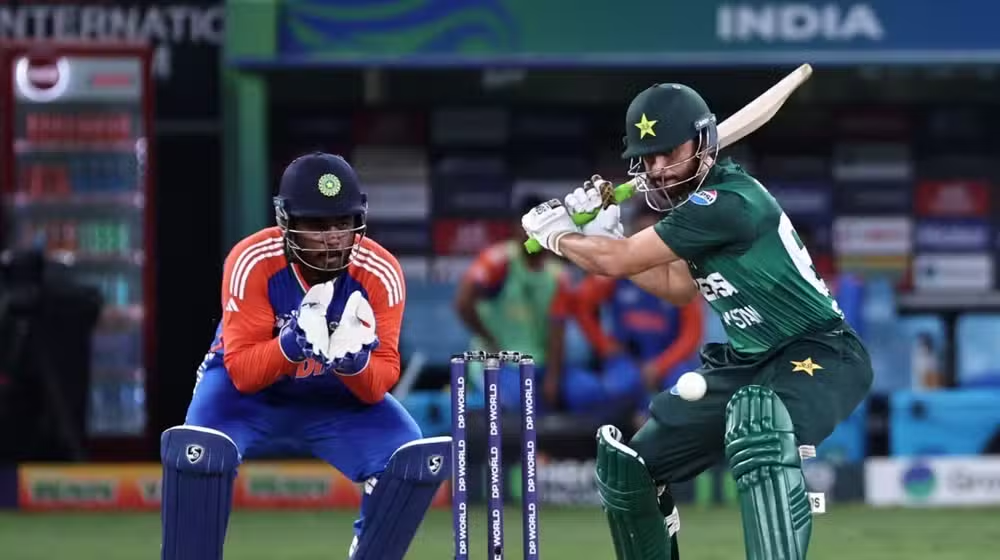
Sri Lanka T20 World Cup Security Plan: Elite Units for India-Pakistan Match
The cricket pitch in Colombo is usually a place for spin battles and cover drives. But for the next 30 days, it will be one of the most heavily guarded locations on Earth.
In a major security update that highlights the extreme tension surrounding the 2026 ICC Men’s T20 World Cup, the Sri Lankan government has confirmed the deployment of “Elite Armed Units” specifically to protect the Indian and Pakistani cricket teams.
With the arch-rivals set to collide on February 15, 2026, at the R. Premadasa Stadium, Sri Lanka is taking no chances. The haunting memories of the “Four-Day Border Conflict” from last year (2025) still linger, turning this group stage match into a geopolitical flashpoint.
The “Presidential” Security Protocol
Sri Lanka’s Sports Minister, Sunil Kumara Gamage, stated today that the government has accorded “Highest Priority” status to the tournament. What does this mean in practice? It means the cricketers will receive protection usually reserved for visiting Heads of State.
Security officials, speaking on condition of anonymity, revealed an “Airport-to-Airport” security shield.
“From the time they step out of the airport till they return to their aircraft, they will be protected by armed guards. There is no gap in the chain.”
Table 1: The “Iron Dome” Security Tier for IND vs PAK
| Security Layer | Description | Target Group |
| Tier 1 (Inner Circle) | Elite Commando Units (STF) | India & Pakistan Squads |
| Tier 2 (Transit) | Armored Escorts & Road Closures | Team Buses |
| Tier 3 (Venue) | 3-Step Checkpoints & Drone Surveillance | R. Premadasa Stadium |
| Tier 4 (Intelligence) | Active monitoring of regional threats | Colombo City Limits |
The “Four-Day War” Shadow
Why is the security so intense this year?
Unlike previous World Cups, the 2026 edition is being played in the shadow of the 2025 Border Conflict. The brief but intense four-day military engagement between the two nuclear-armed neighbors last year has completely severed bilateral trust.
This conflict is the primary reason for the “Hybrid Model” currently in place:
- India’s Stance: Refused to play in Pakistan (originally a co-host) or travel to any venue where security could be compromised.
- Pakistan’s Stance: Refused to play in India, forcing their matches to be relocated to neutral Sri Lanka.
The result is a tournament spread across the ocean, with Sri Lanka acting as the “neutral Switzerland” of Asian cricket.
The Bangladesh Exit & Scotland’s Entry
The tension isn’t limited to India and Pakistan. In a move that shocked the cricketing world earlier this month, Bangladesh officially withdrew from the tournament.
The Bangladesh Cricket Board (BCB) cited security concerns regarding their scheduled matches in India. When the ICC rejected their request to shift matches to a neutral venue, Bangladesh pulled the plug.
- The Replacement: The ICC moved swiftly to draft Scotland into the tournament to replace Bangladesh.
- The Fallout: Pakistan has expressed “solidarity” with Bangladesh, with sources inside the PCB hinting that a boycott is still on the table if their own security demands aren’t met to the letter.
Sri Lanka’s Delicate Balancing Act
Caught in the middle of this diplomatic storm is the host, Sri Lanka.
Cricket Secretary Bandula Dissanayake emphasized today that Colombo is determined to remain neutral.
“We do not want to be drawn into regional conflicts,” Dissanayake said. “Our job is to host cricket. We remain open to hosting future tournaments for any of these nations if requested.”
For Sri Lanka, this is more than just a game; it is a test of their ability to host global events amidst regional chaos. A safe India-Pakistan match could open the doors for more neutral-venue hosting rights in the future.
Player Spotlight: The Mystery Factor
Amidst the guns and guards, cricket must eventually be played.
While Babar Azam and Jasprit Bumrah grab the headlines, all eyes in the Pakistan camp are on their new mystery spinner, Usman Tariq.
Tariq, who has been tearing up the domestic leagues, is Pakistan’s “Secret Weapon” for the Colombo pitch.
- The Quote: “I want to create moments people remember forever,” Tariq said in a recent tribute video by his franchise, Desert Vipers.
- The Tactic: With Sri Lankan pitches expected to turn, Tariq’s mystery spin could be the difference between a win and a loss in the high-pressure cooker of February 15.
Editorial Conclusion: The Calm Before the Storm
As we approach the February 7 opener, the atmosphere in Colombo is heavy. The floodlights are ready, the commandos are in position, and the fans are holding their breath.
This isn’t just a World Cup; it is a diplomatic mission disguised as a cricket tournament. If Sri Lanka pulls this off, they won’t just win accolades; they might just save Asian cricket.
Will Pakistan actually take the field, or is a last-minute boycott looming?
Stay locked to T20WorldCup2026.com for live updates from Colombo.