Bangladesh Refuses to Play T20 World Cup 2026 Matches in India Over Safety Concerns
The cricket world has been thrown into chaos just weeks before the ICC Men’s T20 World Cup 2026 begins. Bangladesh Cricket Board dropped a bombshell announcement on January 4, 2026, declaring they will not travel to India for their scheduled group stage matches due to serious safety concerns. This decision comes after the shocking removal of star pacer Mustafizur Rahman from the Indian Premier League, triggering a diplomatic and sporting crisis that threatens to derail cricket’s biggest T20 tournament.
The controversy erupted when Kolkata Knight Riders were forced by the BCCI to release Mustafizur—whom they’d purchased for a staggering ₹9.2 crore just weeks earlier—from their IPL 2026 squad. The BCB immediately held emergency meetings and has now formally requested the International Cricket Council to relocate all four of Bangladesh’s group matches from Indian venues to Sri Lanka.
The Breaking Point: What Actually Happened?
The situation escalated rapidly over a single weekend. On Saturday, January 3, KKR confirmed Mustafizur’s release following direct instructions from the Board of Control for Cricket in India. The BCCI cited “recent developments” without explicitly mentioning the deteriorating political situation between the South Asian neighbors.
Bangladesh’s sports adviser Asif Nazrul didn’t mince words in his response. He condemned the move publicly and instructed the BCB to take immediate action, stating bluntly: “If a Bangladeshi cricketer cannot play in India despite being under contract, the entire Bangladesh national team cannot feel safe going to play in the World Cup.”
The BCB board of directors convened an emergency meeting and issued a formal statement confirming their stance. They emphasized that safeguarding player welfare and ensuring a secure environment takes absolute priority over tournament participation.
Bangladesh’s Official Demands to ICC
| BCB Request | Details |
|---|---|
| Match Relocation | All four group stage fixtures moved from India to Sri Lanka |
| Venues Affected | Eden Gardens Kolkata (3 matches), Wankhede Mumbai (1 match) |
| Security Guarantee | Formal assurance from ICC regarding player safety |
| Government Backing | Full support from Bangladesh interim government |
The BCB statement read: “Following thorough assessment of the prevailing situation and growing concerns regarding safety and security of the Bangladesh contingent in India, and considering advice from the Bangladesh Government, the board resolved that the Bangladesh national team will not travel to India under current conditions.”
BCCI Fires Back: “Logistical Nightmare”
The BCCI didn’t wait long to respond to Bangladesh’s demands. A senior BCCI source told PTI that relocating matches at this stage would be practically impossible and called the request unrealistic.
“You can’t just change games at someone’s whims and fancies. It is a logistical nightmare,” the BCCI source stated firmly. “Think about opposition teams—their air tickets and hotels are already booked. On all days there are three games each, which means one game is in Sri Lanka. There’s broadcast crew to consider. This will be easier said than done.”
The source’s comments highlight the massive operational challenges involved. With the tournament starting February 7—just over a month away—shifting four matches would impact:
- Opposition teams: England, West Indies, Nepal, and Italy have finalized travel arrangements
- Broadcasting contracts: TV crews and equipment positioned for Indian venues
- Ticket sales: Thousands of fans have purchased tickets for Kolkata and Mumbai matches
- Sponsorship deals: Venue-specific agreements already signed
- Hotel bookings: Team accommodations confirmed months in advance
Political Tensions Spill Into Cricket
The cricket controversy didn’t emerge from nowhere—it’s the latest flashpoint in rapidly deteriorating India-Bangladesh relations. Political tensions have been building since August 2024, when former Prime Minister Sheikh Hasina fled to New Delhi following mass protests against her government.
Recent incidents have further strained relations:
From Bangladesh’s Perspective:
- Hindu minority attacks in Bangladesh, including the horrific lynching and burning of Dipu Chandra Das in Mymensingh district
- India’s External Affairs Ministry condemned “unremitting hostility against minorities”
- Hindutva activists attempting to storm Bangladesh High Commission in New Delhi
From India’s Perspective:
- Bangladesh government’s perceived failure to protect Hindu minorities
- Interim leader Muhammad Yunus’s condemnation came only after international pressure
- Concerns about religious fundamentalism rising in Bangladesh post-Hasina
Bangladesh’s Ministry of Foreign Affairs fired back last week, expressing concern over violence against minorities in India and demanding impartial investigations—essentially throwing India’s criticism back at them.
Impact on Scheduled T20 World Cup Fixtures
Bangladesh’s group stage schedule currently looks like this:
| Match | Original Date | Planned Venue | Opponent |
|---|---|---|---|
| Match 1 | February 7 | Eden Gardens, Kolkata | West Indies |
| Match 2 | February 9 | Eden Gardens, Kolkata | Italy |
| Match 3 | February 14 | Eden Gardens, Kolkata | England |
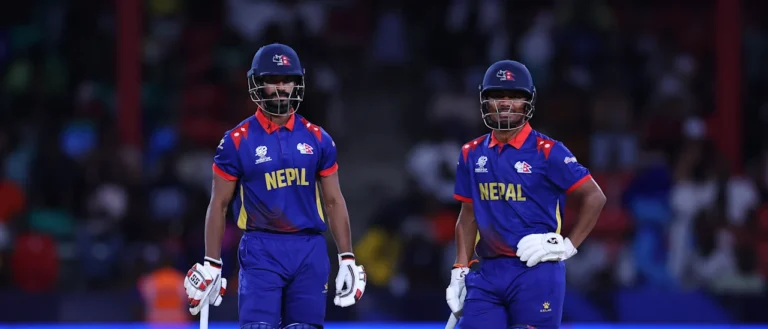
| Match 4 | February 17 | Wankhede, Mumbai | Nepal |
If Bangladesh’s request gets approved, these matches would shift to Sri Lankan venues. However, this creates cascading problems since Sri Lanka is already hosting Pakistan’s entire group stage campaign—Pakistan refused to travel to India due to their own security concerns, an arrangement finalized months ago through ICC mediation.
The Broader Sporting Fallout
This crisis extends beyond just the T20 World Cup. Cricket relations between India and Bangladesh have collapsed across multiple formats:
- Women’s cricket tour: Bangladesh women’s team’s India tour postponed indefinitely
- Men’s bilateral series: Indian men’s team tour of Bangladesh cancelled in August
- IPL broadcasting: Bangladesh government advisor Nazrul requested suspension of IPL broadcasts in Bangladesh
- Future tours: All India-Bangladesh cricket exchanges now in serious doubt
Nazrul’s statement carried particular venom: “Under no circumstances will we tolerate any insult to Bangladeshi cricket, cricketers, or Bangladesh itself. The days of servitude are over.”
That language signals this has become about national pride, not just player safety, making compromise extremely difficult.
What Happens Next? Possible Scenarios
Scenario 1: ICC Forces Compromise
ICC Chairman Jay Shah (formerly BCCI chief) could broker a middle-ground solution—perhaps hosting Bangladesh matches in neutral Sri Lankan venues while India retains other group matches. This maintains tournament integrity while addressing Bangladesh’s security concerns.
Scenario 2: Bangladesh Withdraws
If the ICC and BCCI refuse relocation, Bangladesh might withdraw entirely from the T20 World Cup 2026 tournament. This would be unprecedented and catastrophic for cricket’s reputation, but national governments are clearly involved now, taking decisions beyond cricket boards’ control.
Scenario 3: Status Quo Maintained
The BCCI and ICC could call Bangladesh’s bluff, refusing any changes. Bangladesh would then face an impossible choice: lose face by backing down and traveling to India anyway, or follow through on withdrawal threats.
Scenario 4: Last-Minute Security Guarantees
Diplomatic back-channels might produce government-level security assurances that allow Bangladesh to travel to India. This seems unlikely given how far relations have deteriorated, but stranger things have happened in cricket diplomacy.
Mustafizur Rahman Breaks His Silence
Caught in the middle of this geopolitical storm, Mustafizur Rahman finally spoke publicly about his IPL release. The left-arm pacer, who was thrilled about his record ₹9.2 crore KKR contract, expressed frustration and helplessness.
“What can I do?” Mustafizur reportedly said, summing up his position perfectly. He’s a professional cricketer with no control over government policies or diplomatic tensions, yet he’s paying the price career-wise.
The pacer’s situation highlights how individual athletes become collateral damage when politics invades sport. His lucrative IPL contract vanished overnight, and now his T20 World Cup participation hangs in the balance too.
Fan Reactions and Tournament Stakes
Cricket fans globally are watching this drama unfold with growing concern. The T20 World Cup 2026 represents the sport’s premier T20 event, and Bangladesh’s potential absence would seriously diminish the tournament’s credibility.
Group A particularly faces disruption. England, West Indies, Nepal, and Italy have prepared specifically to face Bangladesh on Indian pitches. Changing venues alters conditions dramatically—Sri Lankan wickets behave completely differently from Indian surfaces, affecting team strategies and selections.
For fans who’ve already purchased tickets expecting to watch Bangladesh play in Kolkata and Mumbai, this creates massive disappointment and potential financial losses.
Historical Context: Not the First Time
This isn’t the first instance of political tensions disrupting cricket in South Asia. Pakistan’s refusal to travel to India for Champions Trophy 2025 (now delayed to 2026) created similar headaches, eventually resolved by moving all Pakistan matches to UAE and then Sri Lanka.
The India-Pakistan cricket rivalry has been frozen for years due to political hostility, with the teams only meeting in ICC tournaments on neutral venues. Bangladesh-India cricket now risks following the same poisonous path.
What makes this situation particularly bitter is that India and Bangladesh have historically enjoyed warm cricketing relations. Bangladesh’s rise as a competitive cricket nation owed much to Indian support and bilateral series. That goodwill has evaporated shockingly fast.
The ICC’s Impossible Position
ICC Chairman Jay Shah finds himself in an incredibly difficult position. His background as former BCCI secretary means Bangladesh questions his neutrality. Yet he must somehow mediate between the world’s most powerful cricket board (BCCI) and a member nation making legitimate security concerns.
The ICC’s credibility depends on handling this crisis appropriately. If they’re seen as favoring BCCI interests over genuine player safety concerns, it damages their authority. But if they cave to Bangladesh’s demands at the last minute, it sets a dangerous precedent where any nation can demand changes weeks before tournaments.
The coming days will reveal whether cricket’s governing body can actually govern, or whether political considerations now completely control the sport’s destiny.
Frequently Asked Questions
Q1: Why is Bangladesh refusing to play T20 World Cup matches in India?
Bangladesh refuses to travel to India citing safety concerns after Mustafizur Rahman was forcibly removed from IPL 2026 by BCCI despite his ₹9.2 crore contract with KKR.
Q2: Can the ICC actually move Bangladesh’s matches to Sri Lanka?
Moving matches is extremely difficult with just a month remaining. The BCCI calls it a “logistical nightmare” due to booked hotels, tickets sold, broadcast arrangements, and Sri Lanka already hosting Pakistan’s matches.
Q3: What matches does Bangladesh have scheduled in India?
Bangladesh was scheduled to play three matches at Eden Gardens Kolkata (vs West Indies, Italy, England) and one at Wankhede Mumbai (vs Nepal) between February 7-17.
Q4: What happens if Bangladesh withdraws from T20 World Cup 2026?
If Bangladesh withdraws, it would be unprecedented in modern cricket and would seriously damage the tournament’s credibility. Group A standings would need recalculation, and other teams’ preparations would be disrupted.
Q5: Why did BCCI force KKR to release Mustafizur Rahman?
The BCCI cited “recent developments” without explicit details, but the move clearly relates to deteriorating India-Bangladesh political relations following violence against minorities in both countries.
Q6: Has this happened before in cricket tournaments?
Yes—Pakistan refused to travel to India for Champions Trophy and now T20 World Cup 2026, with matches relocated to Sri Lanka through ICC-brokered agreements reached months in advance.