ICC Rejects BCB’s Venue Shift Request: Bangladesh Must Play T20 World Cup 2026 in India
The diplomatic and cricketing standoff that has threatened to derail the lead-up to the ICC Men’s T20 World Cup 2026 has reached its decisive conclusion. The International Cricket Council (ICC) has officially rejected the Bangladesh Cricket Board’s (BCB) petition to relocate their group stage matches from India to a neutral venue.
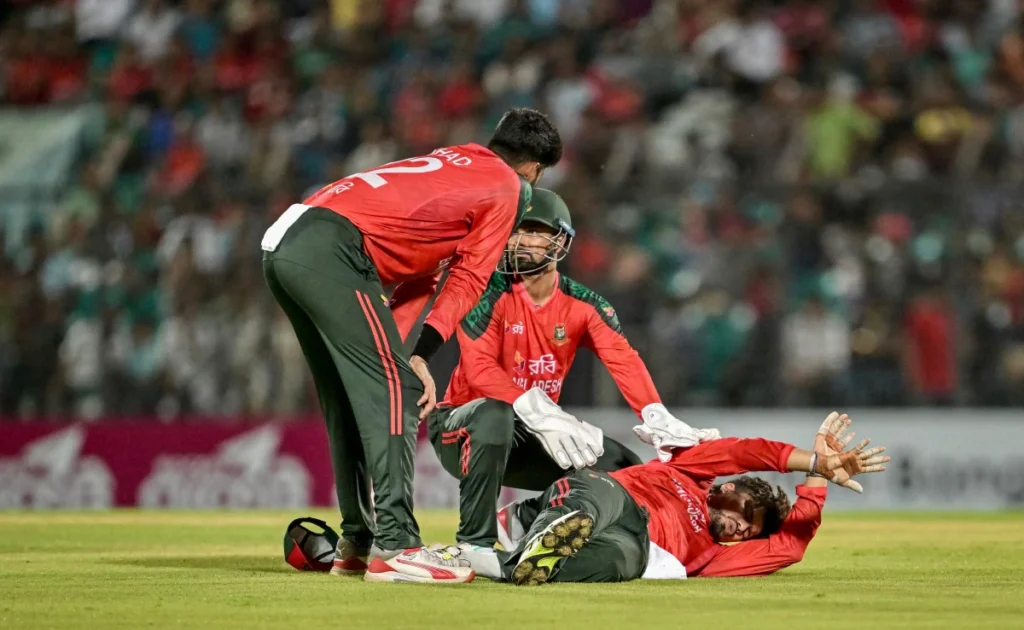
In a high-stakes virtual meeting held on Tuesday, January 13, 2026, the global governing body stood its ground, informing the BCB that their scheduled fixtures in Kolkata and Mumbai will proceed as planned. The verdict leaves Bangladesh with a stark choice: board the plane to India or face severe sanctions, including the forfeiture of World Cup points.
The Verdict: “No Credible Threat”
For weeks, the BCB has lobbied for a “hybrid model”—similar to the one used in the 2023 Asia Cup—citing a “hostile environment” and security concerns for their players in India. However, the ICC’s decision to dismiss this plea rests on a comprehensive, independent security assessment.
According to sources privy to the meeting, the ICC’s security consultants have categorized the risk level for the matches in Kolkata and Mumbai as “low to moderate.” In the lexicon of international event security, this is a standard rating for major sporting events in metropolitan cities, implying that while vigilance is required, there is no specific or imminent danger to the team.
Key Reasons for Rejection:
- Managed Risk Protocols: The ICC stated that standard high-level security protocols—including presidential-style convoys and hotel lockdowns—are sufficient to mitigate any potential unrest.
- BCCI’s Assurances: The Board of Control for Cricket in India (BCCI) and local law enforcement agencies in West Bengal and Maharashtra have provided written guarantees regarding the safety of the Bangladeshi contingent.
- Logistical Nightmare: With the tournament set to begin on February 7, shifting venues to Sri Lanka (BCB’s preferred neutral ground) was deemed logistically impossible.
The Catalyst: The Mustafizur Rahman & IPL Fallout
To understand why the BCB is so reluctant to travel, one must look beyond the pitch. The cricketing relationship between the two neighbors has hit a historic low, exacerbated by a mix of politics and franchise cricket drama.
The flashpoint was the controversial release of Bangladeshi pacer Mustafizur Rahman from the Kolkata Knight Riders (KKR). The left-arm pacer had been acquired for a massive sum of INR 9.20 crore (approx. USD 1.1 million), signaling his value to the franchise. However, reports emerged that the BCCI “instructed” KKR to release the bowler due to “political sensitivities” arising from the geopolitical climate between the two nations.
The Retaliation:
Viewing this as a humiliation, the Bangladesh government retaliated by banning the broadcast of the Indian Premier League (IPL) within Bangladesh. This “tit-for-tat” diplomacy has poisoned the atmosphere, leading the BCB to claim that their players would be walking into a hostile environment in India, particularly in Kolkata, a city that usually welcomes them with open arms due to shared linguistic heritage.
The Schedule: Group C Fixtures Set in Stone
The ICC has made it clear: the schedule remains unchanged. Bangladesh has been drawn in Group C, a competitive group that includes former champions the West Indies and England.
Confirmed Itinerary for Bangladesh:
| Date | Opponent | Venue | City |
| Feb 7 | West Indies | Eden Gardens | Kolkata |
| Feb 9 | Italy | Eden Gardens | Kolkata |
| Feb 14 | England | Eden Gardens | Kolkata |
| Feb 17 | Nepal | Wankhede Stadium | Mumbai |
The choice of Eden Gardens, Kolkata for three of the four matches was originally intended to be a convenience for Bangladeshi fans traveling across the border. Now, it has become the epicenter of the controversy.
The “Terms of Participation”: Calling the Bluff
The ICC’s firm stance is backed by the “Terms of Participation” agreement signed by all member nations.
What happens if Bangladesh refuses to travel?
- Forfeiture: The matches will be awarded to the opposition (West Indies, Italy, England, Nepal) as walkovers. This would guarantee Bangladesh’s exit from the tournament in the group stage.
- Financial Penalties: The BCB relies heavily on ICC revenue distribution. A boycott could lead to the withholding of funds.
- Suspension: In extreme cases, the ICC has the power to suspend a member board for failing to fulfill its obligations without valid cause.
“The ICC is essentially calling the BCB’s bluff,” notes a senior sports analyst based in Dubai. “By labeling the risk as ‘low to moderate,’ they have removed the ‘force majeure’ defense. If Bangladesh doesn’t show up, it’s a voluntary withdrawal, not a security necessity. The legal and financial ramifications of that are too high for the BCB to swallow.”
A Test of Diplomacy
While the ICC has closed the door on a venue change, the diplomatic channels are likely burning hot. The BCB is now in a precarious position. They must balance domestic political pressure—which demands a tough stance against India—with the pragmatic need to participate in a global event.
The focus now shifts to the BCB headquarters in Dhaka. Will they accept the security assurances and board the flight? Or will the T20 World Cup 2026 witness an unprecedented boycott?
With the opener against the West Indies less than a month away, the clock is ticking. For now, the message from the ICC is loud and clear: The show will go on, and it will go on in India.