New Zealand Squad for T20 World Cup 2026: Full Team List & Analysis
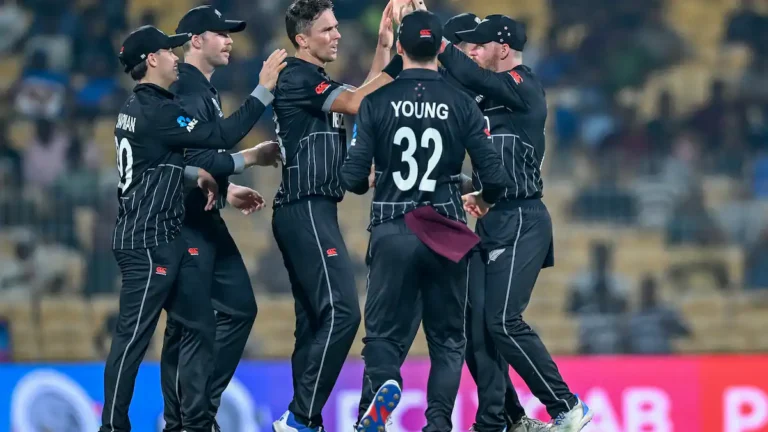
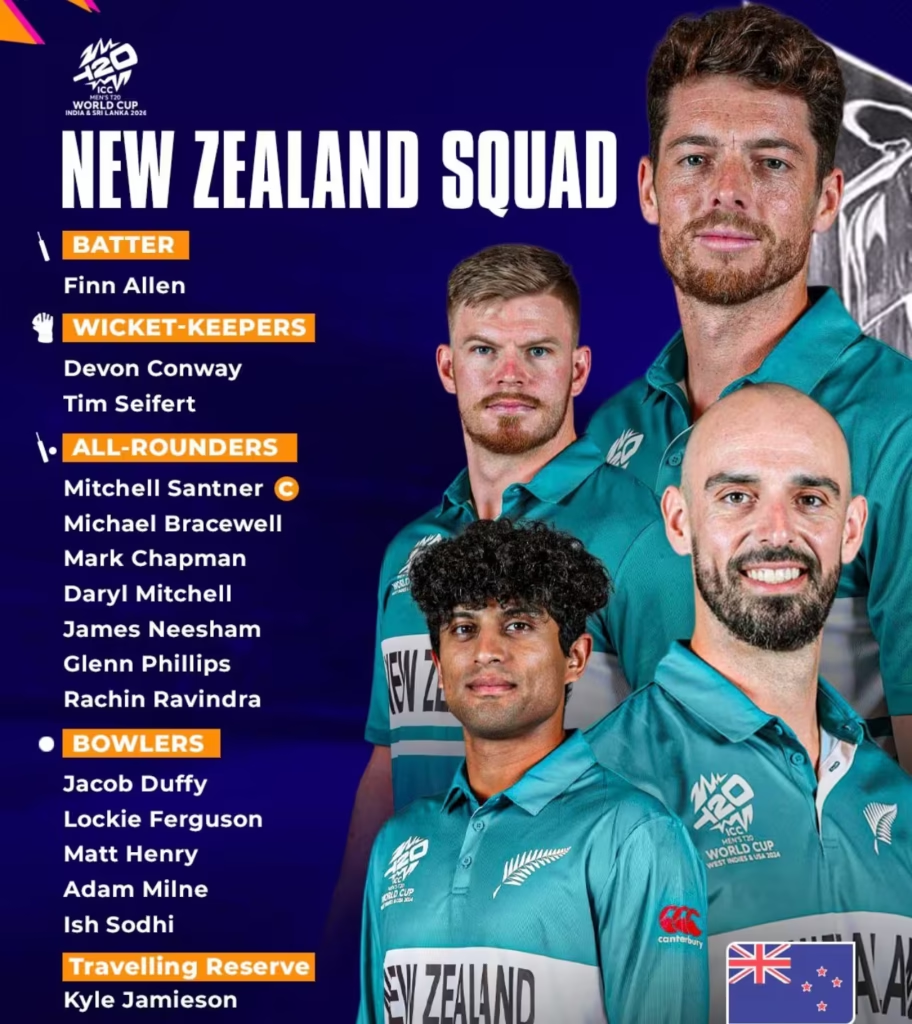
In the world of international cricket, squad announcements are usually routine affairs—a list of familiar names punctuated by the occasional surprise. But the New Zealand squad revealed today for the ICC Men’s T20 World Cup 2026 feels different. It feels like a specific tool forged for a specific job.
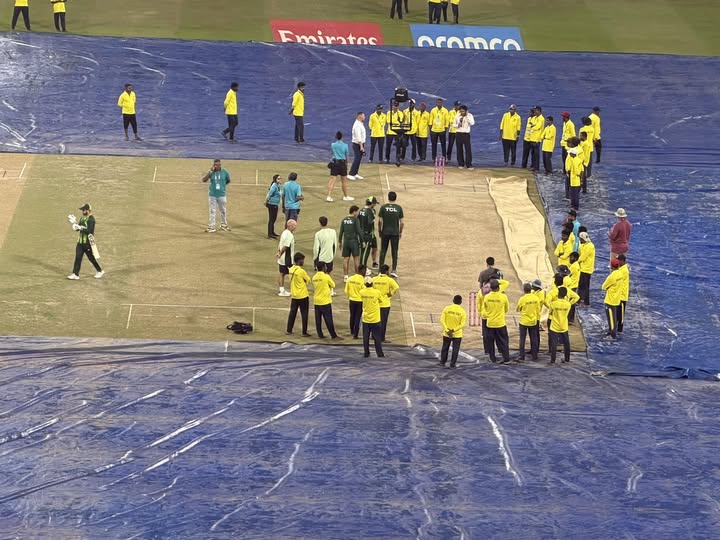
As the cricketing world turns its eyes toward the sub-continent for the tournament kicking off in February, the Black Caps have unveiled a lineup that balances heavy nostalgia with a singular, explosive new storyline. Under the calm, bespectacled leadership of Mitchell Santner, New Zealand isn’t just sending a team to India and Sri Lanka; they are deploying a unit designed to thrive in the dust and heat of Chennai.
Here is a look at why this squad is unique, the heartwarming rise of its newest star, and the strategic gambles that could finally bring the trophy home.
Read More: Adam Milne Replaced with Ben Sears Due to injury.
The Fairytale of Jacob Duffy: A Lesson in Resilience
The headline story of this selection is undoubtedly Jacob Duffy. In an era where T20 cricket is often obsessed with youth and “raw potential,” Duffy’s selection is a victory for the grinder, the veteran, and the late bloomer.
At 31 years old, Duffy is set to feature in his very first World Cup. For many, 31 is the age where fast bowlers start looking at the sunset, but Duffy has just played the sun up. His 2025 season was nothing short of a phenomenon. To capture 81 international wickets in a single calendar year is impressive; to break a 40-year-old record held by the legendary Sir Richard Hadlee (79 wickets) is historic.
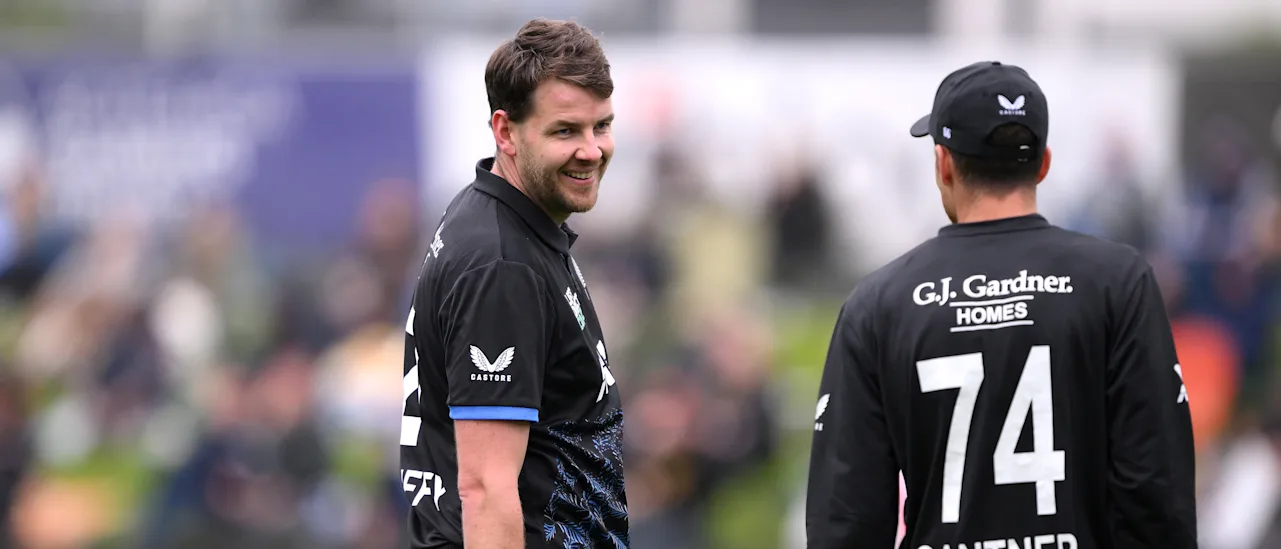
Duffy isn’t just making up the numbers. He enters the tournament as the second-ranked T20I bowler in the world. His inclusion adds a vital “in-form” element to a pace attack that has battled injury. While his teammates have hundreds of global caps between them, Duffy brings the hunger of a rookie combined with the skillset of a master. He has carried the New Zealand attack across all formats while the big guns rested or rehabilitated, and his selection sends a powerful message to the domestic circuit: Performance matters more than reputation.
The Chennai Connection: A Spin-Heavy Strategy
If you look closely at the fixtures, you’ll understand the composition of this squad. New Zealand plays their opening match against Afghanistan on February 8, followed by critical Group D clashes, with three of their four group games hosted at the MA Chidambaram Stadium in Chennai.
Anyone who watches the IPL knows that Chennai is the spiritual home of spin. The Chepauk surface grips, turns, and slows down—conditions that usually terrify fast-bowling nations. However, New Zealand has leaned into this.
Mitchell Santner, the captain, knows every blade of grass at Chepauk thanks to his long tenure with the Chennai Super Kings. He has built a squad in his own image. The selection of Ish Sodhi rekindles a partnership that dates back to the 2016 World Cup in India, offering a blend of left-arm orthodox control and leg-spin flair.
But the depth goes deeper. With Michael Bracewell, Glenn Phillips, and the golden child of Kiwi cricket, Rachin Ravindra, the Black Caps have five genuine all-round options who can turn the ball. This isn’t just about bowling variety; it’s about batting depth. It allows New Zealand to play a “floater” game, sending in hitters like Phillips or Ravindra to dismantle spin attacks in the middle overs—a tactic that will be crucial against the likes of Afghanistan and South Africa.
The “Dad Squad”: Managing Life and Logistics
Perhaps the most humanizing aspect of this squad announcement is how New Zealand Cricket (NZC) is managing the personal lives of its players. In high-stakes professional sports, family often takes a backseat, but the Black Caps are taking a progressive approach.
Both Lockie Ferguson and Matt Henry—the spearheads of the pace attack—are expecting children during the tournament window. The management has already confirmed that short-term paternity leave will be granted. This necessitates a fluid squad structure, which explains the specific role of Kyle Jamieson as a travelling reserve who can slot in seamlessly when the new fathers head home briefly.
Furthermore, the medical team is pulling off a juggling act that would make a circus performer sweat. With five key players—including Captain Santner, Finn Allen, and Mark Chapman—currently nursing injuries ranging from adductor strains to ankle issues, this squad is a calculated risk. They are betting on the recovery of their “A-Team” rather than panicking and selecting fully fit “B-Team” players. It shows a tremendous amount of trust in the medical staff and the resilience of the players.
The Group of Death? Analyzing Group D
New Zealand finds themselves in Group D, a pool that is deceptively dangerous.
- Afghanistan: Playing Afghanistan in Chennai is arguably the toughest opening fixture possible. The Afghans are spin wizards, and the conditions will suit them just as much as the Kiwis.
- South Africa: The Proteas are perennial threats, and their clashes with New Zealand are always high-voltage thrillers.
- Canada & UAE: While technically minnows, the UAE will be playing in conditions they know intimately.
Head Coach Rob Walter’s comments about the squad’s balance are telling. He highlights the “power and skill” in batting, which is a nod to Finn Allen and Daryl Mitchell. Allen is the fire-starter; if he comes off, he takes the pitch conditions out of the equation. Mitchell is the crisis man, capable of anchoring or exploding as needed.
The Verdict: Can They Win It?
For years, New Zealand held the tag of the “nice guys” who finished second. They are the perennial semi-finalists, the team that punches above its weight. But this 2026 squad feels less like an underdog and more like a specialist unit.
They aren’t trying to be Australia or England, blasting 250 on flat tracks. They have picked a team to win low-scoring, tactical dogfights in the sub-continent. They have a captain who is a chess master in these conditions, a fast bowler in Duffy who is in the form of his life, and a batting lineup that covers every base from pure power (Allen/Seifert) to technical brilliance (Conway/Williamson’s spiritual successor in Ravindra).
The road to the trophy is long, and the fitness clouds are worrying. But if the bodies hold up, and if Jacob Duffy can translate his historic 2025 form onto the global stage, the Black Caps might just spin their way to glory.
Key Watch: Keep an eye on the warm-up series against India later this month. It will be the litmus test for whether those niggling injuries are truly healed and if the Santner-Sodhi reunion still has its old magic.