
ICC Men’s T20 World Cup 2026 Groups & Teams: Complete Tournament Breakdown
Cricket fans around the globe are counting down the days until the ICC Men’s T20 World Cup 2026 kicks off across India and Sri Lanka. This edition brings something truly special—20 nations battling it out from February 7 to March 8, 2026, with the subcontinent hosting its first T20 World Cup in years.
The tournament format has been designed to maximize excitement while giving every team a fair shot at glory. With groups now officially announced, we can finally map out the blockbuster encounters and underdog stories that will define this championship.
Tournament Format Explained
The 2026 edition follows a carefully structured format that ensures competitive balance. Twenty teams have been split into four groups of five, with each squad facing every other team in their group once. This round-robin approach guarantees that form, not luck, determines who progresses.
Only the top two teams from each group will advance to the Super Eight stage, where the tournament’s intensity multiplies. This qualification system means every single match carries enormous weight—one bad day could end a team’s World Cup dreams before they’ve really begun.
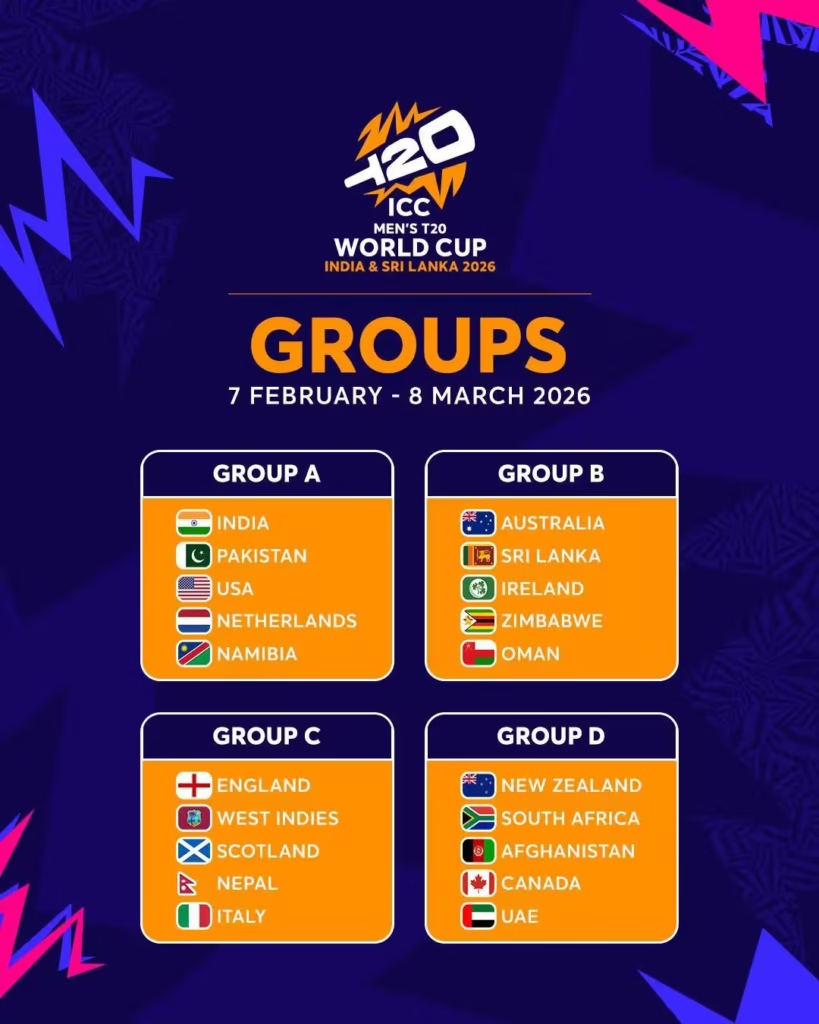
ICC T20 World Cup 2026 Groups (Official)
The four-group structure creates natural storylines and rivalries while preventing any team from having an easy path to the knockout rounds. Traditional powerhouses must prove themselves against hungry challengers, and associate nations get their moment on cricket’s biggest stage without being overwhelmed.

Group A: The Group of Death
| Team | Qualification Route | T20I Ranking |
|---|---|---|
| India | Tournament Host | Top 5 |
| Pakistan | ICC Rankings | Top 5 |
| United States | Americas Qualifier | Rising |
| Netherlands | Europe Qualifier | Established Associate |
| Namibia | Africa Qualifier | Competitive Associate |
Group A has been labeled the “group of death” for good reason. India and Pakistan’s presence alone guarantees global viewership records, but the supporting cast makes this group genuinely unpredictable.
India enters as co-host with massive home advantage and a squad brimming with T20 specialists. Their batting depth and spin bowling arsenal should thrive on subcontinental pitches. Pakistan brings their trademark unpredictability—capable of demolishing any opponent on their day while equally capable of inexplicable collapses.
The United States shocked everyone at the 2024 World Cup with their Super Eight qualification. They’ve invested heavily in infrastructure and talent development, making them more than just tournament fillers. The Netherlands have consistently punched above their weight in ICC events, with their disciplined approach troubling bigger nations.
Namibia rounds out the group as Africa’s representative. Their journey through qualifying showed resilience and tactical nous. While reaching the Super Eight would be a massive achievement, they possess match-winners who could upset the applecart on the right day.
Key Matches to Watch:
- India vs Pakistan (date to be announced)
- Pakistan vs Netherlands
- India vs United States
- Netherlands vs Namibia
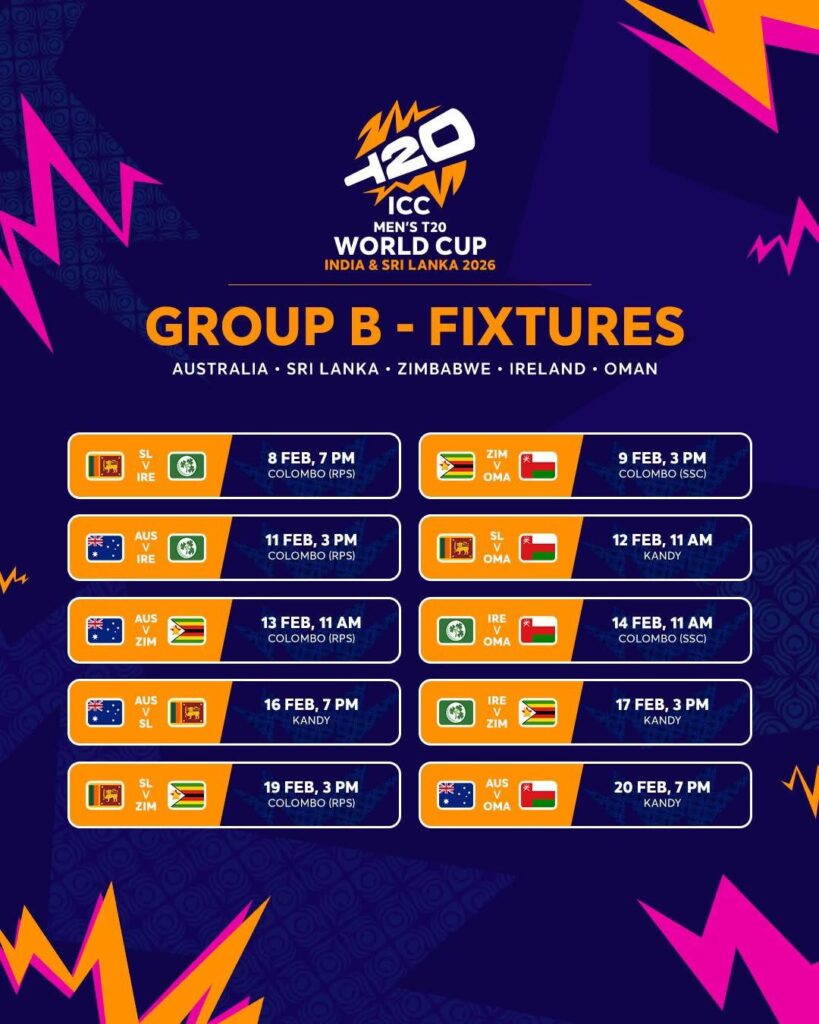
Group B: Australia’s Challenge
| Team | Qualification Route | Strength Factor |
|---|---|---|
| Australia | Top 7 Finish 2024 | Three-time Champions |
| Sri Lanka | Tournament Host | Home Conditions |
| Ireland | ICC Rankings | Giant-killers |
| Zimbabwe | Africa Qualifier | Resurgent Force |
| Oman | Asia Qualifier | Gulf Power |
Group B presents fascinating dynamics. Australia arrives as tournament favorites for many analysts, their winning pedigree in World Cups unmatched. However, Sri Lankan conditions could neutralize some of Australia’s power-hitting advantages while favoring Sri Lanka’s spinners.
Sri Lanka co-hosts the tournament with everything to prove. Recent inconsistency has frustrated fans, but home crowds could inspire a resurgence. Their spin attack remains formidable, and the pitches in Colombo and Hambantota will be tailor-made for their style.
Ireland continues their role as cricket’s ultimate spoiler. They’ve knocked out bigger teams in previous tournaments and possess genuine match-winners with both bat and ball. Zimbabwe has rediscovered their competitive edge after years of struggle, with young talent complementing experienced heads.
Oman qualified through the Asia pathway and brings Gulf cricket’s growing influence. Playing in similar conditions regularly gives them familiarity advantages that shouldn’t be underestimated.
Predicted Qualifiers: Australia and Sri Lanka, but Ireland could easily upset this prediction.
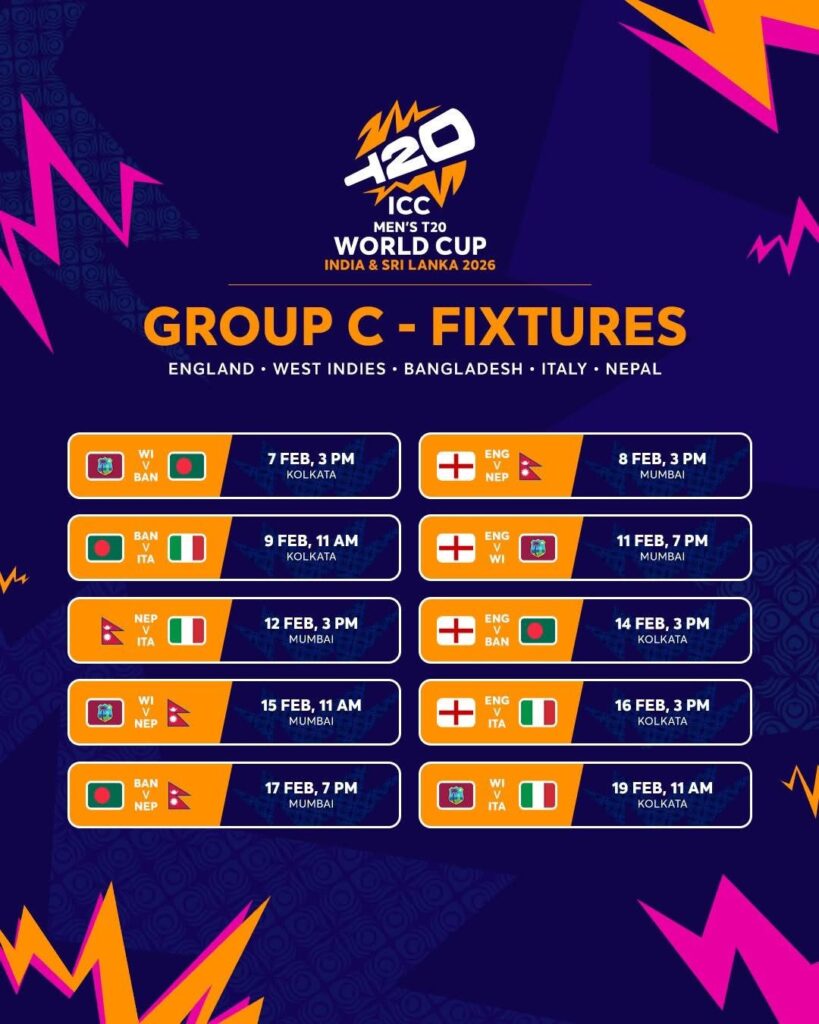
Group C: England’s Redemption Arc
England leads Group C after a disappointing 2024 campaign. Their aggressive “Bazball” T20 approach sometimes backfires, but when clicking, they’re unstoppable. The West Indies bring two T20 World Cup titles and Caribbean flair that makes them perpetually dangerous.
Scotland has evolved into a subcontinental force with improving pace options complementing their traditional spin strength. Nepal’s qualification represents a watershed moment for Himalayan cricket. Their passionate fanbase and improving infrastructure signal associate cricket’s bright future.
Italy’s presence shows European cricket’s expansion beyond traditional strongholds. While they’re underdogs, tournament exposure provides invaluable experience for Italian cricket’s development.
Group C Breakdown
| Team | X-Factor | Challenge |
|---|---|---|
| England | Explosive batting | Consistency |
| West Indies | Power hitting | Death bowling |
| Scotland | Spin attack | Pace depth |
| Nepal | Home-like conditions | Experience gap |
| Italy | Nothing to lose | Skill differential |
Must-Watch Fixtures:
- England vs West Indies
- Scotland vs Nepal
- West Indies vs Scotland
- England vs Scotland
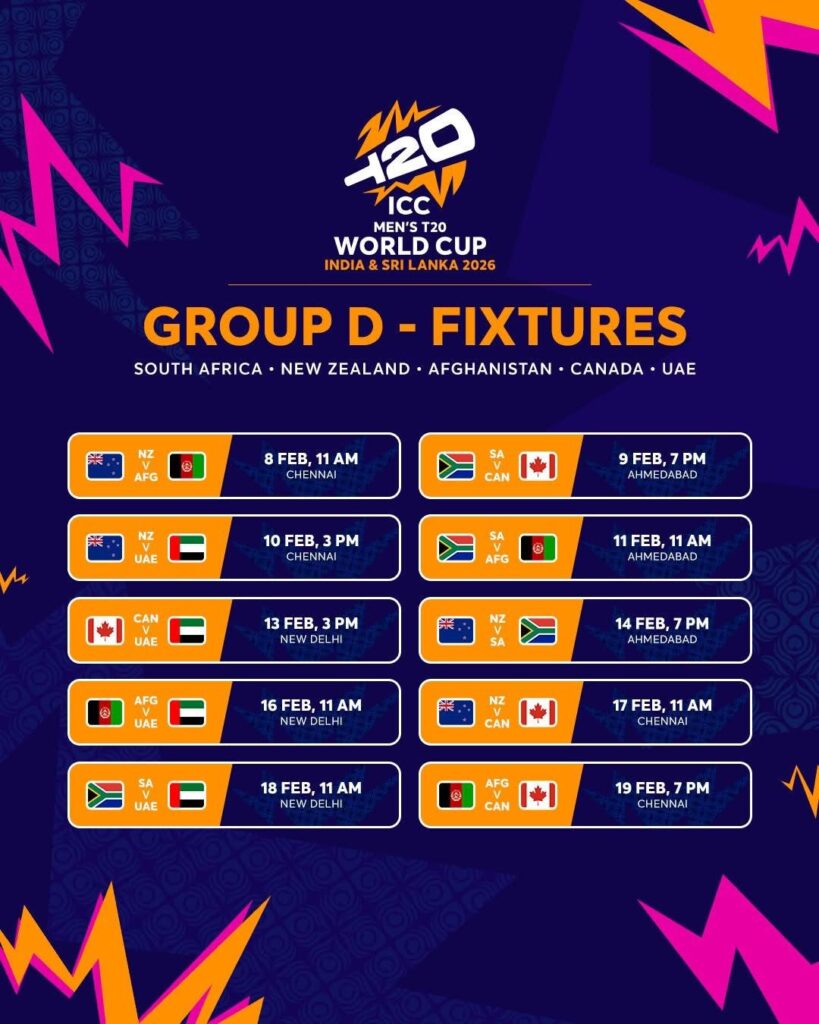
Group D: The Balanced Quartet
Group D might be the most evenly matched, with New Zealand, South Africa, and Afghanistan all capable of advancing. New Zealand’s tournament temperament has seen them reach multiple finals, though converting that into titles remains elusive.
South Africa carries the “chokers” tag unfairly but will be desperate to finally claim a World Cup in any format. Afghanistan has transformed into a T20 powerhouse with world-class spinners and fearless batting. Their improvement trajectory suggests they’re genuine contenders, not just participants.
Canada returns to the World Cup stage after qualification success, while the United Arab Emirates brings their Asia-Pacific pedigree. Both teams will view upsets as realistic rather than fantasy.
Group D Team Profiles
New Zealand: Tactical acumen, balanced attack, World Cup experience
South Africa: Explosive batting, quality pace bowling, pressure questions
Afghanistan: World-class spin, aggressive batting, knockout pedigree
Canada: Americas champions, returning confidence
UAE: Asian conditions familiarity, consistent qualification record
Dark Horse Alert: Afghanistan could top this group and reach the semifinals.
Qualification Pathways Explained
Understanding how teams reached the World Cup adds context to group dynamics. The top seven finishers from the 2024 World Cup automatically qualified, rewarding consistent excellence. ICC T20I rankings provided additional direct spots for top-performing teams.
Regional qualifiers determined the remaining positions:
- Americas Qualifier: United States and Canada emerged victorious
- Europe Qualifier: Netherlands and Italy secured their spots
- Africa Qualifier: Namibia and Zimbabwe represented the continent
- Asia/East Asia-Pacific Qualifier: Nepal, Oman, and UAE qualified
This pathway system ensures global representation while maintaining competitive standards. Associate nations must earn their place through performance, not sympathy.
Tournament Schedule Structure
The group stage runs from February 7 through February 25, with matches spread across venues in both India and Sri Lanka. Each team plays four group matches, with strategic rest days built into the schedule.
Phase 1: Group Stage (February 7-25)
Phase 2: Super Eight (February 27-March 4)
Phase 3: Semifinals (March 6-7)
Phase 4: Final (March 8)
This compressed timeline creates relentless pressure. Teams must maintain fitness, form, and focus across potentially eight matches in 30 days. Squad depth becomes crucial as injuries and fatigue inevitably impact selections.
Venue Characteristics
Indian venues will offer different challenges than Sri Lankan grounds. Mumbai’s Wankhede Stadium typically favors batsmen with shorter boundaries and flat pitches. Chennai’s MA Chidambaram Stadium offers turn from day one, rewarding quality spinners.
Bengaluru’s M Chinnaswamy Stadium sits at altitude, where the ball travels further but spinners struggle for grip. Delhi’s Arun Jaitley Stadium can be a minefield for batsmen when spinners operate.
Sri Lankan venues bring their own characteristics. Colombo’s R Premadasa Stadium has historically produced spinning tracks. Hambantota’s Mahinda Rajapaksa Stadium offers pace and bounce unusual for the region.
Strategic Considerations:
- Teams with quality spinners gain advantages at most venues
- Death bowling skills become premium assets
- Batting depth matters more than top-order firepower
- Fielding standards could decide close matches
Key Rivalries and Marquee Matchups
Beyond India vs Pakistan, several fixtures will capture global attention. England vs Australia renews the Ashes rivalry in T20 format. South Africa vs New Zealand reignites their knockout-stage psychological warfare.
West Indies vs England pits former colonial power against Caribbean champions. Australia vs Sri Lanka in Sri Lankan conditions offers tactical intrigue.
Associate nations facing traditional powers creates David vs Goliath drama. Nepal’s potential match against India would be emotional for Nepali fans. Ireland against anyone brings upset potential that keeps viewers engaged.
Super Eight Qualification Scenarios
Eight teams advancing from 20 starters means 60% elimination during the group stage. Net run rate could prove decisive when teams finish level on points. This mathematical tiebreaker rewards aggressive cricket and punishes conservative approaches.
Teams must balance winning matches with maintaining healthy net run rates. Crushing victories against weaker opponents can prove crucial if tiebreakers determine qualification. However, prioritizing net run rate over match situations risks actual defeats.
Net Run Rate Strategy:
- Big wins matter as much as narrow victories
- Batting first allows controlled run rate management
- Death overs become doubly important
- Defensive captaincy could cost qualification
Tournament Favorites and Dark Horses
Pre-tournament favorites include India (home advantage), Australia (winning pedigree), and England (aggressive approach). Pakistan’s unpredictability makes them simultaneously favorites and question marks.
Dark horses worth watching are Afghanistan (spin strength), Sri Lanka (home conditions), and New Zealand (tournament experience). South Africa could finally break their World Cup curse with this talented squad.
Don’t write off associate nations entirely. The United States proved in 2024 that upsets happen. Netherlands, Ireland, and Nepal possess match-winners capable of shocking results.
Frequently Asked Questions
How many teams participate in the T20 World Cup 2026?
Twenty teams compete in the 2026 edition, the largest field in T20 World Cup history. This expansion provides more nations opportunities while maintaining competitive quality through qualifying standards.
What is the group stage format?
Four groups of five teams each play round-robin matches. Every team faces their four group opponents once, with the top two from each group advancing to the Super Eight stage.
When does the tournament begin?
The opening match takes place on February 7, 2026, with the final scheduled for March 8, 2026. The entire tournament spans 30 days of intense cricket action.
Which venues will host matches?
Multiple stadiums across India and Sri Lanka will host matches. Specific venue allocations for each group are being finalized, with announcements expected soon from the ICC.
How are tied matches decided?
If group matches end in ties, a Super Over determines the winner. If points are equal at the group conclusion, net run rate becomes the tiebreaker for Super Eight qualification.
Can I watch all matches live?
Broadcasting rights vary by region, but global coverage ensures fans worldwide can watch matches through television networks or streaming platforms. Check local listings for specific broadcast details.
Conclusion
The ICC Men’s T20 World Cup 2026 promises unforgettable cricket with its perfect storm of traditional rivalries, emerging nations, and subcontinental conditions. Each group offers unique storylines, from India-Pakistan fireworks to associate nations hunting historic upsets.
As teams finalize preparations, fans can anticipate a month of cricket drama where reputations will be enhanced, hearts will be broken, and one nation will emerge as T20 world champions. The expanded format ensures maximum excitement while maintaining the tournament’s prestige.
Mark your calendars for February 7, 2026. World Cup cricket is returning to where it belongs—the passionate, cricket-crazy subcontinent. The groups are set, the stage is ready, and history awaits.