Star India Batter Undergoes Surgery, Ruled Out of NZ Series
In the high-octane world of international cricket, timing is everything. It is not just about the timing of a cover drive or a perfectly disguised slower ball; it is about physical peaking at the exact right moment. For Team India and their rising star Tilak Varma, the timing of the latest medical update from the BCCI has sent a ripple of anxiety through the fanbase, just as the drums begin to beat for the ICC Men’s T20 World Cup 2026.
The confirmation that the 23-year-old middle-order lynchpin has undergone surgery for an abdominal issue—ruling him out of the majority of the crucial New Zealand series—is a significant subplot in India’s campaign to conquer the world on home soil.
The News Breakdown: What We Know
The Board of Control for Cricket in India (BCCI) released a statement on January 8, 2026, providing clarity on Varma’s sudden absence. Here is the factual landscape:
- The Procedure: Tilak Varma underwent surgery for an abdominal issue on January 7 and was discharged the following morning.
- The Impact: He is officially ruled out of the first three T20Is against New Zealand (Nagpur, Raipur, Guwahati).
- The Hope: His availability for the final two matches (Visakhapatnam and Thiruvananthapuram) is currently listed as “tentative,” subject to how his body responds to rehabilitation.
While the phrase “recovering well” offers solace, the word “surgery” less than a month before a World Cup is a word no coach, captain, or fan wants to hear.
The Rise of the Left-Handed Architect
To understand why this injury matters, one must quantify the value Tilak Varma brings to this Indian setup. We are not talking about a fringe player fighting for a spot; we are discussing the current No. 3 ranked T20I batter in the world.
Varma has evolved from a talented youngster into a “vital cog,” as described by pundits and the team management alike. His recent exploits in South Africa were nothing short of a masterclass in modern T20 batting. Scoring 187 runs in just four innings to finish as the highest run-getter in the series displayed his two greatest assets: consistency and adaptability.
Why Tilak is Unique:
- The Left-Handed Advantage: In a top order often dominated by right-handers (barring the openers), Tilak provides that crucial disruption to opposition bowlers in the middle overs. He forces captains to change their field settings and rethink their spin options.
- Gear Shifting: Unlike pure power hitters who have one gear, or anchors who take too long to settle, Tilak has mastered the hybrid role. He can arrest a collapse, rotate strike against spin, and then explode at the death.
- Temperament: At just 23, he possesses the cool head of a ten-year veteran. This temperament is the currency of champions in World Cup knockouts.
The Tactical Void: Who Fills the Shoes?
With the series against New Zealand starting on January 21, the Indian management faces a tactical dilemma. These five matches were supposed to be the “dress rehearsal”—the final polishing of the Preferred XI before the World Cup begins.
Missing Varma for at least 60% of this series disrupts the chemistry of the middle order.
- The “audition” reopening: This injury forces India to look at backup options. Does this open the door for a player like Rinku Singh to bat higher up the order? Or does it bring a reserve player into the main XI to test the bench strength?
- Disrupted Momentum: The most dangerous thing for a batter in form is a break in rhythm. Varma was “seeing the ball like a football” in South Africa. Returning from surgery involves not just physical healing, but regaining that split-second mental sharpness.
Key Insight: The management stated he will resume “physical training before gradually resorting to skill-based activities.” This indicates a cautious approach. They will likely not risk him for the 4th and 5th T20Is unless he is 100%, prioritizing the World Cup over a bilateral series win.
The Opponent: Why New Zealand is the Perfect Test
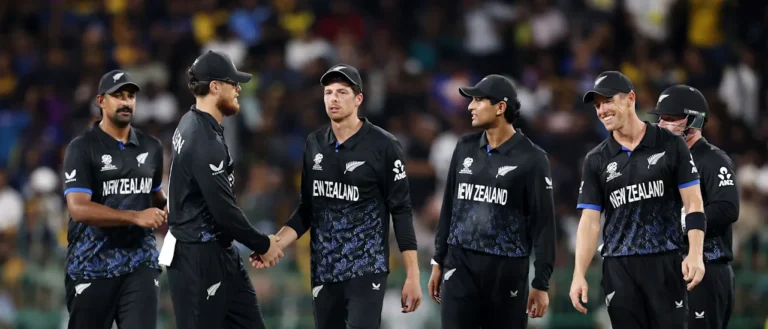
It is unfortunate that Varma misses this specific series, because New Zealand is arguably the best tactical preparation India could ask for. The Black Caps are known for their discipline, their crafty use of spin (Santner, Sodhi, Phillips), and their tactical flexibility.
Playing New Zealand on Indian pitches (Nagpur, Raipur, Guwahati) mimics the exact challenges India will face in the Super 8s and knockouts of the World Cup. Missing this exposure means Varma will head into the mega-event slightly “cold” regarding match practice against top-tier opposition, relying heavily on net sessions rather than game time.
The Series Schedule (India vs. New Zealand):
- 1st T20I: Jan 21, Nagpur (Varma: OUT)
- 2nd T20I: Jan 23, Raipur (Varma: OUT)
- 3rd T20I: Jan 25, Guwahati (Varma: OUT)
- 4th T20I: Jan 28, Visakhapatnam (Status: Pending)
- 5th T20I: Jan 31, Thiruvananthapuram (Status: Pending)
The Shadow of 2022 and the “Injury Curse”
Indian cricket fans suffer from a mild form of PTSD regarding injuries before major tournaments. The memory of losing Jasprit Bumrah before the 2022 T20 World Cup still stings. While Varma is a batter and not a fast bowler (where injuries are more volatile), the anxiety is similar.
The BCCI’s medical team is under immense scrutiny. In the modern game, “Workload Management” is a buzzword, yet injuries seem to strike at the most inopportune moments. The challenge here is the nature of an abdominal surgery. It affects the core—the very center of a batter’s power generation. Every rotational movement, every lofted shot, and every dive in the field relies on core strength.
The Silver Lining: If there is a positive angle to be found, it is that this happened in early January. With the series running until the end of the month and the World Cup following, Varma has a window. A surgery in February would have been a tournament-ender. A surgery in January is a “race,” but a winnable one.
The Human Element: A 23-Year-Old’s Resilience
Beyond the stats and strategies, we must consider the human element. Tilak Varma is a young man on the cusp of his first home World Cup—the dream of every Indian child who picks up a bat. To be struck down by a surgical issue weeks before the event requires immense mental fortitude.
Rehabilitation is lonely. While the team travels to Nagpur and Raipur, soaking in the adulation of the fans, Varma will be in the gym, doing repetitive exercises, watching on TV. How he handles this mental isolation will determine how effective he is when he returns.
Conclusion: A Test of Depth
The “Road to the World Cup” is rarely a straight line; it is usually a winding path filled with potholes. Tilak Varma’s injury is a pothole.
However, great teams are not defined by their starting XI when everything is perfect; they are defined by how they adapt when things go wrong. This series against New Zealand has now transformed from a “victory lap” into a rigorous stress test for India’s squad depth.
If Varma recovers in time for the 4th or 5th T20I, the roar in Visakhapatnam or Thiruvananthapuram will be deafening. If he takes longer, India must find a way to win without their World No. 3. The countdown to the World Cup has officially begun, and the drama is already underway.