Ali Khan’s Viral “KFC Post” After India Visa Denial Rocks USA’s T20 World Cup 2026 Campaign
Cricket’s biggest tournament just hit a major diplomatic roadblock. Four Pakistani-origin players representing the United States have been denied visas to enter India, effectively barring them from participating in the T20 World Cup 2026 that begins February 7. Among those affected is veteran pacer Ali Khan, whose philosophical Instagram response—featuring KFC chicken—has gone massively viral across social media platforms.
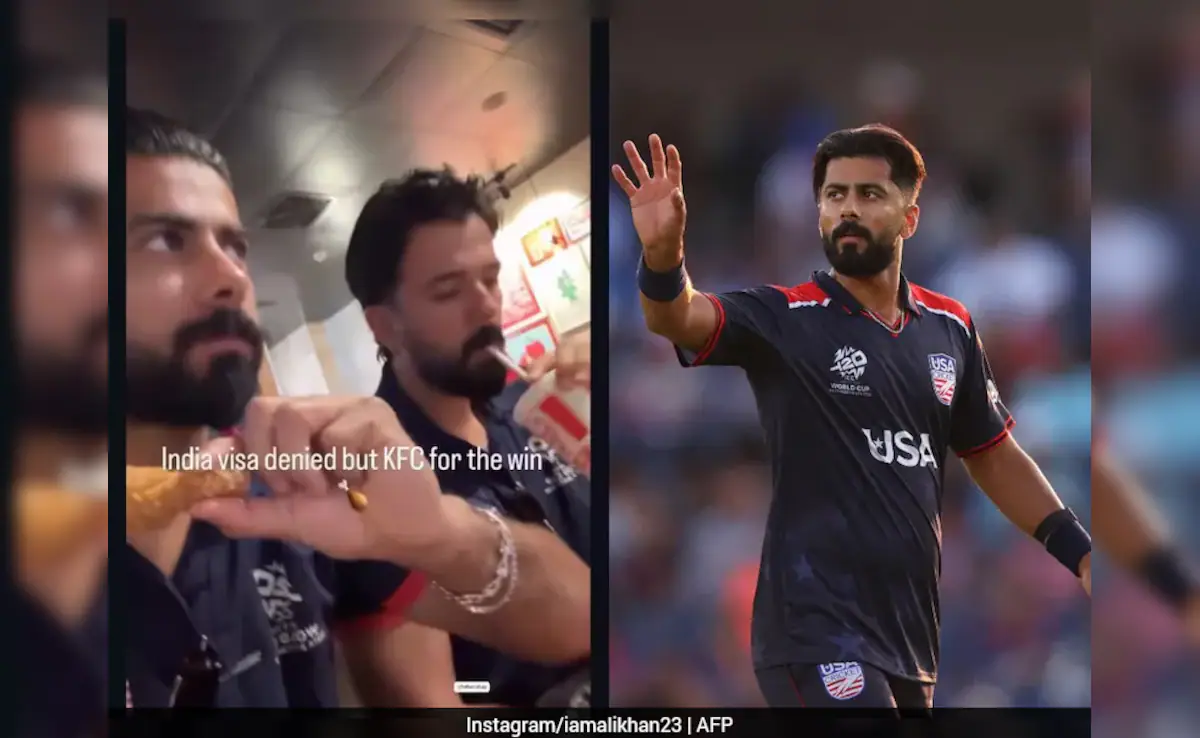
The 35-year-old fast bowler posted a story on Instagram with the caption: “India visa denied but KFC for the win,” alongside a picture of himself enjoying fried chicken. While the post appears lighthearted on the surface, it masks a devastating professional blow for players who’ve worked years to represent their adopted nation on cricket’s grandest stage. The tournament across India and Sri Lanka now faces its first major controversy before a single ball has been bowled.
The Four Players Caught in Visa Limbo
USA Cricket’s 20-member squad announcement should have been a celebration. Instead, it’s become a geopolitical nightmare for four Pakistani-born cricketers who hold American citizenship but remain unable to secure Indian visas under current regulations.
Affected USA Squad Members:
| Player Name | Role | Birth Place (Pakistan) | International Experience |
|---|---|---|---|
| Ali Khan | Fast Bowler | Attock, Punjab | USA regular since 2018 |
| Ehsan Adil | Fast Bowler | Sheikhupura | Ex-Pakistan international (3 Tests, 6 ODIs) |
| Shayan Jahangir | Batsman | Karachi | Emerging USA talent |
| Mohammad Mohsin | All-rounder | Mingora, Khyber Pakhtunkhwa | Domestic circuit performer |
All four have migrated to the United States and obtained American citizenship, representing the USA in various international competitions. However, India’s visa regulations require Pakistan-born individuals to apply using passports from their country of birth—a bureaucratic requirement that’s created this tournament-threatening situation.
Ali Khan’s Cricket Journey: From Attock to America
Understanding the emotional weight of this visa denial requires knowing Ali Khan’s remarkable journey. Born in Attock, Punjab, Pakistan, Khan migrated to the United States pursuing cricket dreams that seemed impossible in Pakistan’s highly competitive domestic circuit.
Ali Khan Career Highlights:
- First Pakistan-born player to feature in the Indian Premier League (IPL)
- Played for Kolkata Knight Riders in IPL 2019
- USA’s leading wicket-taker in multiple ICC tournaments
- Crucial member of USA’s historic 2024 T20 World Cup campaign
- Over 60 international wickets for the United States
The bitter irony? Khan previously played in India during his IPL stint with KKR, making this visa rejection particularly puzzling for observers who remember him bowling at Eden Gardens in Kolkata.
The Legal Framework Behind Visa Denials
India’s visa regulations for Pakistani-born individuals aren’t arbitrary—they’re rooted in decades of complex geopolitical tensions between the nuclear-armed neighbors. Even individuals who’ve renounced Pakistani citizenship and obtained other nationalities must navigate additional scrutiny.
India’s Visa Requirements for Pakistan-Born Applicants:
- Must apply using Pakistani passport (even if holding other citizenship)
- Enhanced security clearance procedures
- Longer processing times compared to other nationalities
- Potential for rejection without stated reasons
- Limited appeal mechanisms once denied
According to telecomasia.net, Khan confirmed the denials in a video message: “Yes, it is true that three Pakistani-origin players are denied an Indian visa, which means we are unable to feature in the Twenty20 World Cup.”
Historical Precedent: This Isn’t the First Time
Visa issues for Pakistani-origin cricketers playing for other nations have plagued international tournaments before, creating recurring controversies that damage cricket’s inclusive image.
Previous Visa Denial Cases:
| Year | Player(s) | Representing | Tournament | Outcome |
|---|---|---|---|---|
| 2017 | Usman Khawaja | Australia | Bilateral series | Eventually granted |
| 2019 | Sikander & Saqib Zulfiqar | USA | Regional qualifiers | Denied (missed matches) |
| 2023 | Shiraz Ahmed | USA | ODI World Cup | Delayed visa (barely made it) |
| 2024 | Rehan Ahmed, Shoaib Bashir | England | Test series | Delayed (missed early matches) |
| 2026 | Ali Khan + 3 others | USA | T20 World Cup | Denied (current crisis) |
This pattern reveals systematic issues that international cricket authorities have failed to adequately address. Each incident damages relationships between cricket boards and creates uncertainty for players with Pakistani heritage who’ve chosen to represent other nations.
Eight Nations Potentially Affected by This Policy
USA isn’t alone in facing this dilemma. According to the NDTV report, eight countries have Pakistani-origin players in their T20 World Cup 2026 squads, all potentially vulnerable to similar visa complications.
Countries with Pakistani-Origin Players:
- United States – 4 confirmed players
- United Arab Emirates – Multiple squad members
- Oman – Several key players
- Nepal – Limited numbers
- Canada – At least 2-3 players
- England – Rehan Ahmed, Shoaib Bashir (past issues)
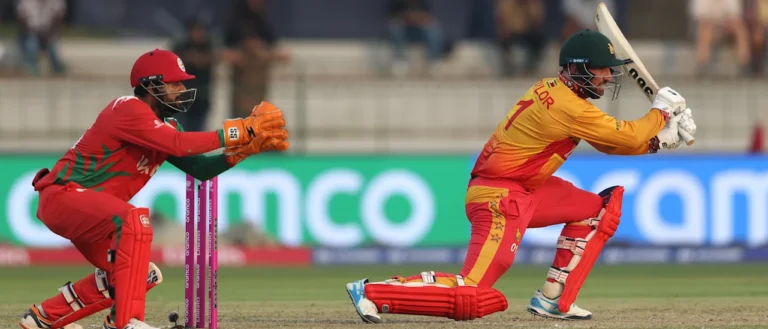
- Zimbabwe – Players of Pakistani descent
- Netherlands – Emerging talent with Pakistani roots
If India applies visa regulations uniformly, this could affect dozens of cricketers across multiple teams, fundamentally altering competitive balance in various tournament groups.
Impact on USA’s Tournament Prospects
Losing four squad members—particularly experienced bowlers like Khan and Adil—creates massive holes in USA’s tournament preparations. The team was already considered underdogs in their group, and these absences make their task significantly harder.
USA’s Group Stage Opponents:
- India (defending champions, host nation)
- Pakistan (traditional powerhouse)
- Namibia (competitive associate nation)
- Netherlands (experienced European side)
Facing India without key Pakistani-origin players adds cruel irony to an already difficult situation. The USA will essentially field a weakened squad in matches where they needed full strength just to remain competitive.
Ehsan Adil: Former Pakistan International Caught in Crossfire
Perhaps the most compelling individual story is Ehsan Adil, who actually represented Pakistan in international cricket before migrating to the United States. Between 2013-2015, Adil played 3 Tests and 6 ODIs for Pakistan, making him the only member of this affected group with prior international experience for Pakistan itself.
Ehsan Adil’s Cricket Timeline:
- 2013-2015: Represented Pakistan in Tests and ODIs
- 2022: Migrated to United States
- 2023-2024: Established himself in USA domestic circuit
- 2025: Selected for T20 World Cup squad
- 2026: Denied visa to compete
Adil’s case raises fascinating questions about cricket identity and national representation. Can someone who previously wore Pakistan’s green now be denied entry to India while wearing American colors? The situation highlights how cricket remains intertwined with geopolitics in the subcontinent.
Social Media Reaction: Khan’s KFC Post Goes Viral
Ali Khan’s Instagram story featuring KFC chicken became an instant meme across cricket Twitter, with fans interpreting the post in various ways.
Interpretations of the Viral Post:
- Philosophical acceptance: Making peace with things beyond his control
- Subtle protest: Humor masking legitimate frustration
- American cultural reference: KFC as quintessentially American comfort food
- Defiant optimism: Refusing to let disappointment define him
The post garnered hundreds of thousands of views and shares, with cricket fans worldwide expressing solidarity with Khan and his teammates while criticizing visa policies they view as discriminatory.
What Can USA Cricket Do Now?
With weeks remaining before the tournament begins, USA Cricket faces limited options to resolve this crisis.
Potential Actions:
Immediate Appeals:
- Diplomatic intervention through US State Department
- ICC pressure on Indian government for exceptions
- Emergency visa re-applications with additional documentation
Squad Adjustments:
- Call up replacement players (weakens overall quality)
- Restructure team strategy around available personnel
- Fast-track development of backup options
Long-term Solutions:
- Lobby for tournament-specific visa exemptions
- Create ICC protocols for Pakistani-origin players
- Establish clearer advance communication with host nations
The clock is ticking, and bureaucratic processes rarely move quickly enough to accommodate sports tournament timelines.
ICC’s Responsibility in This Crisis
Cricket’s governing body has remained conspicuously silent on this issue despite its potential to affect multiple member nations. The ICC’s failure to establish clear protocols for situations like this exposes organizational weaknesses.
What ICC Should Address:
✓ Negotiate blanket tournament visas with host nations
✓ Create transparent eligibility requirements
✓ Establish appeal mechanisms for denied players
✓ Implement contingency plans for affected teams
✓ Ensure host nations cannot use visa policy for competitive advantage
Cricket markets itself as a global sport, but incidents like this reveal how regional politics still dictate who can and cannot participate at the highest levels.
The Broader Question: Cricket and Politics
This visa controversy reopens uncomfortable conversations about separating sport from geopolitics—a separation that cricket has never successfully achieved in South Asia.
Pakistan and India haven’t played bilateral cricket since 2012-2013 due to political tensions, meeting only in ICC tournaments. Now, even those neutral-ground encounters face complications when players with Pakistani heritage represent third countries.
The Core Dilemma:
Should cricketers who’ve changed citizenship and national allegiance still face restrictions based on their birthplace? Does holding an American, Canadian, or British passport not supersede one’s country of origin for sporting purposes?
These questions have no easy answers, but cricket’s leadership must address them if the sport genuinely aspires to global inclusivity.
Frequently Asked Questions
Q1: Why was Ali Khan denied a visa for the T20 World Cup in India?
Ali Khan and three other Pakistani-born USA players were denied visas because India requires Pakistan-born individuals to apply using Pakistani passports, regardless of current citizenship, leading to enhanced scrutiny and potential rejections.
Q2: What was Ali Khan’s “KFC post” about after the visa denial?
Ali Khan posted an Instagram story showing himself with KFC chicken, captioned “India visa denied but KFC for the win,” which went viral as fans interpreted it as philosophical acceptance mixed with subtle frustration.
Q3: How many USA players are affected by India visa denials for T20 World Cup 2026?
Four Pakistani-origin USA players have been denied visas: Ali Khan, Ehsan Adil, Shayan Jahangir, and Mohammad Mohsin—all American citizens born in Pakistan.
Q4: Has this happened to Pakistani-origin cricketers before?
Yes, players like Usman Khawaja (Australia, 2017), Sikander and Saqib Zulfiqar (USA, 2019), and Rehan Ahmed and Shoaib Bashir (England, 2024) have all faced India visa issues in the past.
Q5: Can USA Cricket still field these players if visas are eventually approved?
Yes, if visas are granted before the tournament begins on February 7, the players could join the squad, though preparation time would be significantly reduced.
Q6: Which other countries have Pakistani-origin players who might face similar visa problems?
Eight nations total could be affected: UAE, Oman, Nepal, Canada, England, Zimbabwe, Netherlands, and USA all have Pakistani-origin players in their squads.
Final Thoughts: A Tournament Crisis Before It Even Begins
Ali Khan’s viral KFC post will be remembered as the symbolic image of this controversy—a talented cricketer making light of circumstances completely beyond his control. But beneath the humor lies genuine heartbreak for players who’ve dedicated years to representing their adopted nations, only to be blocked by bureaucratic policies rooted in conflicts they played no part in creating.
The T20 World Cup should celebrate cricket’s global reach and competitive diversity. Instead, it begins under the shadow of visa controversies that highlight how far the sport still has to travel before it can truly claim to transcend politics.
For Khan, Adil, Jahangir, and Mohsin, the coming weeks will determine whether their World Cup dreams remain alive or whether they’ll be watching from home while teammates compete without them. And for cricket itself, this controversy demands reflection about whether the sport’s governing structures are fit for purpose in an increasingly interconnected world.
The tournament begins February 7. Time is running out for solutions that preserve both competitive integrity and basic fairness for players caught in geopolitical crossfire they never created.