India’s 5 Debutants Set for T20 World Cup 2026 Glory
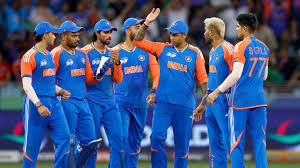
The ICC Men’s T20 World Cup 2026 is not just another tournament for India; it is the official dawn of a new epoch. For over a decade, the “Men in Blue” walked into global events with the colossal shadows of Rohit Sharma, Virat Kohli, and Ravindra Jadeja looming large. But since that triumphant evening in Barbados in 2024, the torch has been passed.
Now, under the aggressive captaincy of Suryakumar Yadav and the tactical mentorship of head coach Gautam Gambhir, a new breed of cricketers is ready to step into the limelight. The transition phase hasn’t been a stumble; it has been a sprint. India hasn’t lost a T20I series since the regime change, suggesting the pipeline is healthier than ever.
As the defending champions prepare to play on home soil (co-hosted with Sri Lanka), five specific names stand out—players who have never featured in a T20 World Cup match but are now pivotal to India’s defense. Here is a deep dive into the “Gen Next” of Indian cricket.
1. Abhishek Sharma: The New “Sprint King”
If there is one face that defines the Suryakumar-Gambhir era of “all-out attack,” it is Abhishek Sharma. The Punjab southpaw has recently shattered records, becoming the fastest batter to reach 1000 T20I runs, surpassing modern giants like Travis Head, Suryakumar Yadav himself, and Glenn Maxwell.
- The X-Factor: Abhishek doesn’t just score; he demoralizes. With 1,115 runs in just 33 T20Is at a staggering strike rate of 188.03, he has solved India’s long-standing powerplay conservatism.
- The Role: He is the designated tone-setter. His job is simple: kill the chase or set a mammoth target in the first six overs.
- The Verdict: Ranked as the No. 1 T20I batter (as per recent form), Abhishek goes into his maiden World Cup not as a rookie, but as India’s biggest threat. His century against Zimbabwe in just his second game was a trailer; the World Cup is the movie.
2. Rinku Singh: The “Finisher” Finally Arrives
Justice has been served. The heartbreak of the 2024 World Cup, where Rinku Singh was relegated to a traveling reserve, is now a distant memory. The diminutive dynamo from Aligarh has forced the door open with sheer weight of performance.
- The Stats: A batting average of 42.31 and a strike rate of 161.77 after 35 games is elite territory. Rinku has proven he isn’t a one-season wonder.
- The Dilemma: Despite his undeniable talent, Rinku faces a unique challenge. The Gambhir-SKY philosophy heavily favors “bits-and-pieces” cricketers—players who can chip in with 2 overs. As a specialist finisher, Rinku has to be so good with the bat that the management ignores the lack of bowling.
- The Expectation: In tight chases, when the crowd in Wankhede or Eden Gardens goes silent, Rinku is the man India will look to. He is the closest heir to the “Dhoni role” India has found in years.
3. Washington Sundar: The Tactical Swiss Army Knife
Washington Sundar is the kind of player captains love and fans sometimes underappreciate. He doesn’t play for highlights; he plays for dot balls. In a tournament played in the subcontinent, his height and high-release spin will be gold dust.
- The Skillset: Sundar is unique because he is a spinner who loves bowling in the Powerplay. His economy rate of 6.92 across 58 T20Is is miserly in the modern game.
- The Evolution: The 26-year-old has added muscle to his batting, making him a genuine floater. With 51 wickets and the ability to hit long balls against spin, he offers the balance that allows India to play an extra pacer if needed.
- The Match-Up: Expect Sundar to be the first name on the team sheet when India faces teams heavy on left-handers (like West Indies or England). He is the silent assassin of this squad.
4. Harshit Rana: The “High Risk, High Reward” Gamble
Perhaps the most debated inclusion is Harshit Rana. The Kolkata Knight Riders speedster is undeniably a favorite of coach Gautam Gambhir, a relationship that has drawn scrutiny. But look past the “teacher’s pet” accusations, and you see a raw diamond.
- The Profile: India has plenty of swing bowlers (Arshdeep) and precision masters (Bumrah). They lack a “hit-the-deck” enforcer who bowls 145 kph+. Rana fills that void.
- The Concern: His economy rate of 10.18 is alarming. He leaks runs, but he also takes wickets (7 wickets in 6 games at 24.71). He is a wicket-taker, not a container.
- The Value Add: Rana can bat. He can tonk huge sixes down the order, giving India batting depth until number 8 or 9. While he is likely the third seamer behind Bumrah and Arshdeep, his aggression could be the wildcard India needs on flat pitches.
5. Tilak Varma: The Elegant Solution
Tilak Varma brings a calm elegance to a chaotic format. The Hyderabad left-hander has had a rollercoaster lead-up to the World Cup, including a serious surgery for testicular torsion that threatened his participation. But his recovery has been timely.
- The Pedigree: Back-to-back centuries in South Africa proved his class against pace and bounce. He isn’t just a slogger; he is a proper batter who can reconstruct an innings if the top order collapses.
- The Versatility: Tilak can bat at No. 3, 4, or 5. He can roll his arm over for handy off-spin. He is the perfect bridge between the explosive top order (Abhishek/Gill) and the finishers (Rinku/Hardik).
- The Comparison: In many ways, he fills the structural role Yuvraj Singh or Suresh Raina once held—a dependable lefty who connects the lineup.
The Big Picture: Can They Fill the Void?
The 2026 T20 World Cup squad is a fascinating experiment. It trades the colossal experience of 2024 for the explosive energy of 2026.
- The “Big Three” are gone. There is no Kohli to anchor, no Rohit to captain, no Jadeja to field at point.
- The New Identity: This team reflects the personality of its captain, Suryakumar Yadav—fearless, innovative, and slightly unorthodox.
For Abhishek Sharma, Washington Sundar, Rinku Singh, Harshit Rana, and Tilak Varma, the debut jitters will be real. But so is the hunger. They aren’t just playing for a trophy; they are playing to prove that the future of Indian cricket is in safe hands.
Come February 2026, the world will be watching.