Mitchell Marsh Defends Australia T20 World Cup Hopes After Pakistan Whitewash
The scoreboard in Lahore made for grim reading. A 3-0 series result is bad enough, but the manner of the defeat—a 111-run demolition in the final game—was historically catastrophic. It was Australia’s heaviest-ever defeat in T20 International history.
Yet, amidst the rubble of a series whitewash against Pakistan, Australian captain Mitchell Marsh struck a tone of defiant optimism. With the ICC Men’s T20 World Cup 2026 starting in just a few days in the spin-friendly hubs of Sri Lanka and India, the cricketing world is asking: Is this confidence, or is it denial?
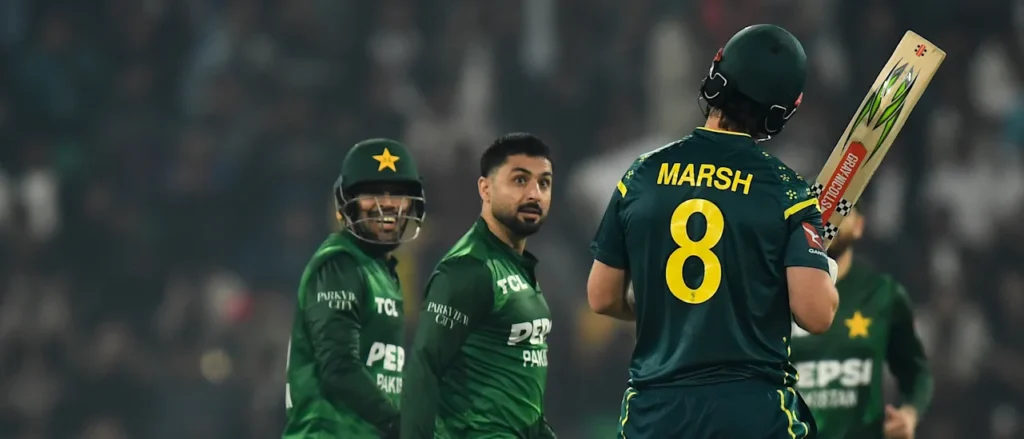
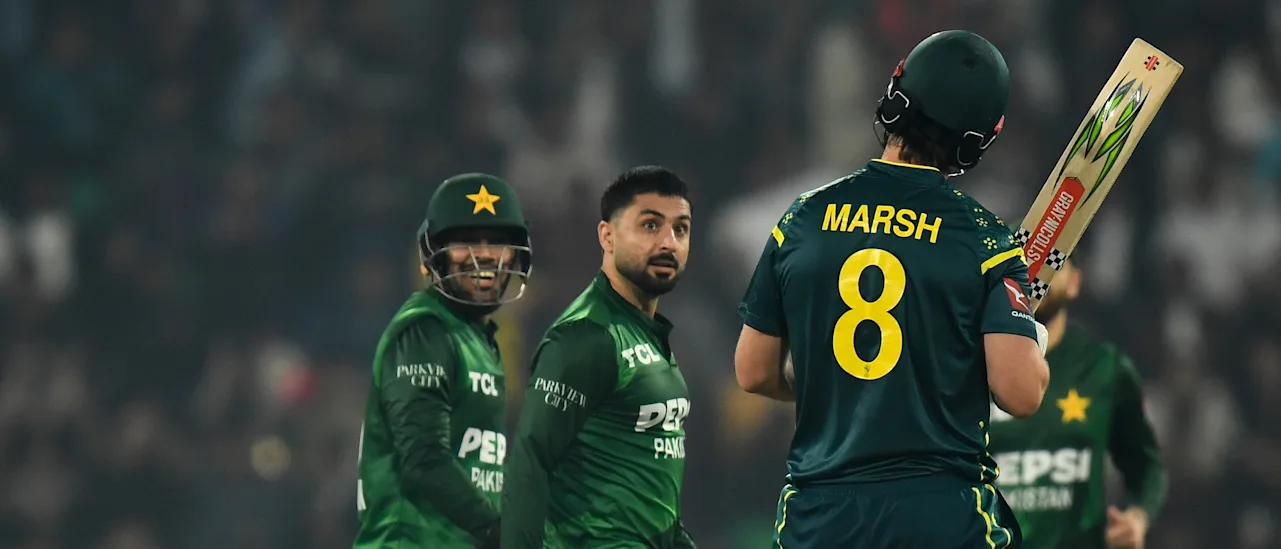
Marsh, facing the press after the final humiliation in Lahore, insisted that his side’s credentials remain intact, urging fans to judge them on their “last 18 months” rather than the last three days.
Here is the deep dive into the stats that worry the experts, the captain’s defense, and the reality facing the Aussies as they board the flight to Colombo.
The “Lahore Collapse”: By The Numbers
To understand why the alarm bells are ringing, one must look at the raw data. Australia didn’t just lose; they were dismantled by a specific weapon that awaits them in the World Cup: Spin.
In three matches, Australia batted second every time, chasing totals that seemed manageable but proved impossible. The collapse wasn’t a one-off; it was a trend.
Table 1: The Series “Spin” Statistics
| Statistic | Data Count | Implication |
| Series Result | 0-3 (Whitewash) | Momentum destroyed. |
| Total Wickets Lost | 38 | Batting lineup unable to survive 20 overs. |
| Wickets Lost to Spin | 33 | 87% of wickets fell to slower bowlers. |
| Run Deficit (Combined) | -223 Runs | Massive margin of defeat across 3 games. |
| 3rd T20I Margin | -111 Runs | Heaviest defeat in AUS T20I history. |
This table paints a terrifying picture. Losing 33 out of 38 wickets to spin bowling in the subcontinent is the ultimate red flag just days before a World Cup in Asia.
The Captain’s Defense: “In Isolation, We Struggled”
Despite the carnage, Mitchell Marsh refused to hit the panic button. His comments in the post-match press conference suggested a leader trying to protect the mental state of his squad.
“In isolation, this series, we struggled. But over the last 18 months, we’ve been one of the best teams in the world and we’ve played spin really well. So, we’ll take the learnings forward to the World Cup.” — Mitchell Marsh
Decoding the Quote:
Marsh is relying on “historical credit.” He argues that the team’s long-term consistency outweighs this short-term failure. He believes the conditions in Lahore were a specific challenge that the team failed to adapt to “in isolation,” rather than a systemic failure of technique.
The “Experience” Factor:
Marsh also hinted at reinforcements.
“We also know that we’ve got some extremely good players of spin coming back and experience coming back. So, we’ve got great trust that we can play well in these conditions.”
While the squad list for the World Cup is largely similar to the one that played in Pakistan (minus the injured Pat Cummins), Marsh is likely referring to the mental switch. He expects big-match players like Glenn Maxwell (who struggled in this series) and Travis Head to flip the switch when the “World Cup mode” is activated.
The Sri Lanka Challenge: Out of the Frying Pan…
If Australia thought Lahore was tough, Colombo might be tougher.
Australia’s group stage matches are scheduled for Sri Lanka, where pitches are notoriously slow, low, and conducive to turn—very similar to what they just failed against in Pakistan.
The Chasing Curse:
One of the most worrying stats highlighted by Marsh was the failure to chase.
“We batted second in all the games… you need to be able to form a couple of partnerships and we weren’t able to do that.”
In modern T20 cricket, chasing is often preferred. However, on deteriorating sub-continental tracks, chasing becomes a nightmare if the spinners get on top early. Pakistan exposed this weakness ruthlessly. If Australia wins the toss in Sri Lanka, will they have the courage to bat first?
Silver Linings: The Australian Spinners
It wasn’t all doom and gloom. Marsh was quick to point out a positive that often gets lost in a heavy defeat: his own bowlers.
While the batters failed, the Australian spinners (likely referring to Adam Zampa and perhaps Tanveer Sangha or part-timers) held their own in patches.
“I thought the way some of our spinners bowled throughout the series (was a positive). Some of the guys who haven’t experienced these conditions before will take these experiences forward.”
This is crucial. If Australia is to win the World Cup, they can’t just rely on pace. They need their spinners to not only take wickets but to control the middle overs. The exposure these bowlers got in Lahore could be the “tuition fee” paid for World Cup success.
Editorial Verdict: A Gamble on “Form vs Class”
There is an old saying in cricket: Form is temporary, class is permanent.
Mitchell Marsh is banking the entire World Cup campaign on this proverb. He is betting that the “class” of the Australian lineup will override the terrible “form” they showed in Pakistan.
The Risk:
If this was just a bad week, Australia will bounce back. They are a resilient cricketing nation.
The Reality:
If this was a technical exposure of their inability to play high-quality spin on turning tracks, then the World Cup could be a very short tournament for the men in yellow.
The 111-run loss is a scar. Whether it heals in time for the opener or festers into a tournament-ending wound remains to be seen.
Australia heads to Sri Lanka now. The practice is over. The real test begins.