Rashid Khan Leads a Power-Packed Afghanistan to T20 World Cup 2026
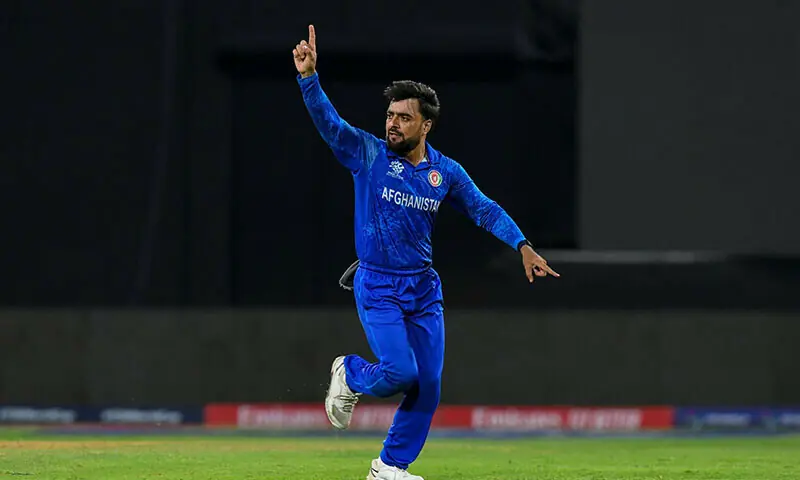
The cricketing world is standing on the precipice of its next great global spectacle, and the drums are already beating in Kabul, Kandahar, and Khost. As the calendar flips to 2026, the Afghanistan Cricket Board (ACB) has officially sounded the battle cry for the upcoming T20 World Cup. In a move that signals a clear intent to transition from “scrappy underdogs” to “undisputed champions,” the board has confirmed that the talismanic Rashid Khan will once again lead the Blue Tigers into the fray. But the headline isn’t just about the captain; it is about the cavalry that is returning with him.
In a decision that has sent ripples of excitement through the fanbase and waves of caution through their opponents, Afghanistan has recalled its heavy artillery. The return of Mujeeb Ur Rahman, Fazalhaq Farooqi, Gulbadin Naib, and Naveen-ul-Haq transforms a talented squad into a genuinely fearsome unit. With the tournament set to be played in the spin-friendly conditions of India and Sri Lanka, Afghanistan is no longer a dark horse—they are legitimate contenders arriving with a squad built perfectly for the conditions.
The Squad: A Reunion of Match-Winners
The 15-member squad announced on New Year’s Eve is a masterclass in balancing aggressive youth with battle-hardened experience. The selectors have clearly prioritized “big match temperament,” bringing back players who have proven they can navigate high-pressure situations. This isn’t a team designed to compete; it is a team designed to conquer.
The most significant talking point is the reintegration of four key players who were missing from recent tours or had been sidelined due to injuries. Their absence was felt, but their return makes the squad look whole again.
First, there is the return of Mujeeb Ur Rahman. His inclusion is a massive strategic boost. Mujeeb’s ability to bowl with the new ball and stifle batters in the powerplay is unique. He allows Rashid Khan to hold himself back for the middle overs, where he is most dangerous. When Mujeeb locks down one end, it creates pressure that invariably leads to wickets at the other.
His return did come at a cost, however; young mystery spinner AM Ghazanfar, who has shown flashes of brilliance, has been pushed to the reserves. It is a harsh call, but one that prioritizes Mujeeb’s vast international experience and his specific matchup advantages against top-tier teams.
Then there is the pace duo of Fazalhaq Farooqi and Naveen-ul-Haq. Farooqi is arguably one of the best new-ball bowlers in T20 cricket today. His absence was keenly felt in the recent white-ball tour of Bangladesh, where Afghanistan missed that early swing and venom. Farooqi’s ability to swing the ball both ways and nail yorkers at the death makes him an indispensable asset.
Conversely, Naveen-ul-Haq returns as the designated “chaos manager.” Recovering from a shoulder injury that ruled him out of the Asia Cup, Naveen brings a distinct set of skills. His variations, slower balls, and cutters will be deadly on the slower surfaces expected in India and Sri Lanka. He thrives when the batters are looking to accelerate, using their own pace against them.
Completing the returning quartet is the “muscle” of the middle order, Gulbadin Naib. Naib brings a hard-hitting dynamism and a useful medium-pace option that provides the captain with balance. His experience in stabilizing innings or launching counter-attacks was sorely missed in previous tours. He is the emotional heartbeat of the side, a player who often lifts the team’s energy simply by being on the field.
The “Asian Advantage”: Why This World Cup is Different
When Naseeb Khan, the ACB CEO, mentioned hoping for “even better results this year,” he wasn’t just offering a standard public relations soundbite. He was hinting at a geographical reality that favors Afghanistan heavily: Asian Conditions.
The 2024 World Cup in the USA and West Indies saw Afghanistan reach the semi-finals, an achievement that stunned the world. They beat heavyweights like New Zealand and Australia on surfaces that were somewhat foreign to them. Now, imagine that same team playing on the turning tracks of Chennai or the low-bounce pitches of Sri Lanka. It is a frightening prospect for the rest of Group D.
With Rashid Khan, Mujeeb Ur Rahman, Noor Ahmad, and the veteran Mohammad Nabi, Afghanistan possesses arguably the most diverse and dangerous spin attack in the tournament. In India, where the ball grips and turns, this quartet could be unplayable. A team facing Afghanistan in India isn’t just playing against 11 men; they are playing against the conditions. Furthermore, Afghan batters like Rahmanullah Gurbaz and Ibrahim Zadran have grown up playing on similar wickets. The “low and slow” nature of subcontinental pitches won’t surprise them; it will empower them to play their natural game.
The Ultimate Warm-Up: West Indies Series in the UAE
Before the World Cup curtain rises, Afghanistan has scheduled a high-octane dress rehearsal. They will host the West Indies for three T20Is in the UAE from January 19 to 22. This series is a masterstroke in scheduling and preparation.
The West Indies are two-time champions and possess some of the most destructive T20 hitters in the world. Playing them mimics the intensity of a World Cup knockout game. It forces the Afghan bowlers to be precise; if you miss your length against the Windies, the ball ends up in the stands. This pressure is exactly what the returning bowlers like Naveen and Farooqi need to get back into the groove.
Moreover, this series allows the management to solve the final pieces of the tactical puzzle. Who partners Gurbaz at the top? Does Gulbadin bat at number 4 or number 6? Can the spin trio operate in tandem effectively after a break? These questions will be answered in the UAE. A series win against a powerhouse like the Windies just weeks before the World Cup would send confidence levels skyrocketing, proving that the Blue Tigers are ready to hunt.
Shadows of 2024: A Legacy to Uphold
To understand the pressure and expectation on this squad, we must look back at 2024. That tournament was a watershed moment for Afghan cricket. By reaching the semi-finals, they shattered the glass ceiling. They didn’t just scrape through; they dominated. Beating New Zealand by 84 runs, stunning Australia, and outplaying Bangladesh showed that their mental game had finally caught up to their physical talent.
However, the semi-final loss was a heartbreak. It showed that while they had the skill, they perhaps lacked the depth to go the final distance. The squad selection for 2026 directly addresses this deficiency. By bringing back experienced heads like Naib and Mujeeb, the selectors are ensuring that when the pressure cooks in a knockout game, the team doesn’t crumble. They are building a squad that knows how to win ugly, not just play beautifully.
Group D Analysis: The Path to Glory
Afghanistan finds itself in Group D, a fascinating mix of styles and strengths. They are placed alongside New Zealand, South Africa, the UAE, and Canada. This group offers a clear, albeit challenging, path to the Super 8s.
The opening clash against New Zealand on February 8 in Chennai is already being billed as a blockbuster. The Kiwis will be out for revenge after their humiliation in 2024, but the venue heavily favors Afghanistan. The Chepauk stadium in Chennai is famous for aiding spinners. If Rashid Khan wins the toss against New Zealand on a dry Chennai afternoon, half the battle might be won before a ball is bowled.
South Africa, while historically strong, has often been vulnerable to high-quality spin. The Proteas have a history of struggling when the ball turns square, which plays right into Afghanistan’s hands. The games against UAE and Canada are matches Afghanistan will be expected to win comprehensively, though they must guard against complacency. In a tournament format, Net Run Rate can be crucial, so clinical performances against the lower-ranked sides are non-negotiable.
Rashid Khan: The Captain and the Icon
Finally, everything circles back to the man at the helm. Rashid Khan is no longer just a superstar bowler; he has matured into a tactical leader. His captaincy in 2024 was proactive and aggressive. He set fields that invited catches, rotated his bowlers with precision, and led from the front with the bat when needed.
For Rashid, this World Cup in India—his “second home” due to his years of IPL heroics—is personal. He knows the conditions better than perhaps any other international captain. He understands the geometry of the grounds, the behavior of the soil, and the rhythm of the Indian crowds. Leading Afghanistan to a World Cup final in India would be the crowning jewel of an already legendary career.
The return of his “brothers in arms”—Mujeeb and Naveen—lightens his load significantly. He doesn’t have to do it all alone. He can trust Farooqi to take wickets upfront and Nabi to control the middle, allowing him to be the strike weapon he was born to be.
Verdict: The Time is Now
The 2026 T20 World Cup squad is not an experiment; it is a statement. Afghanistan is telling the world that their 2024 run was not a fluke. With a squad tailored specifically for Asian conditions, a captain at the peak of his powers, and the return of their premier match-winners, the Blue Tigers are ready.
The world watched them dream in 2024. In 2026, they might just watch them conquer. The stage is set, the squad is ready, and the first ball is only weeks away.