The ‘Chennai Strategy’: Can Mitchell Santner’s Black Caps Finally Break the Curse? (SWOT Analysis)
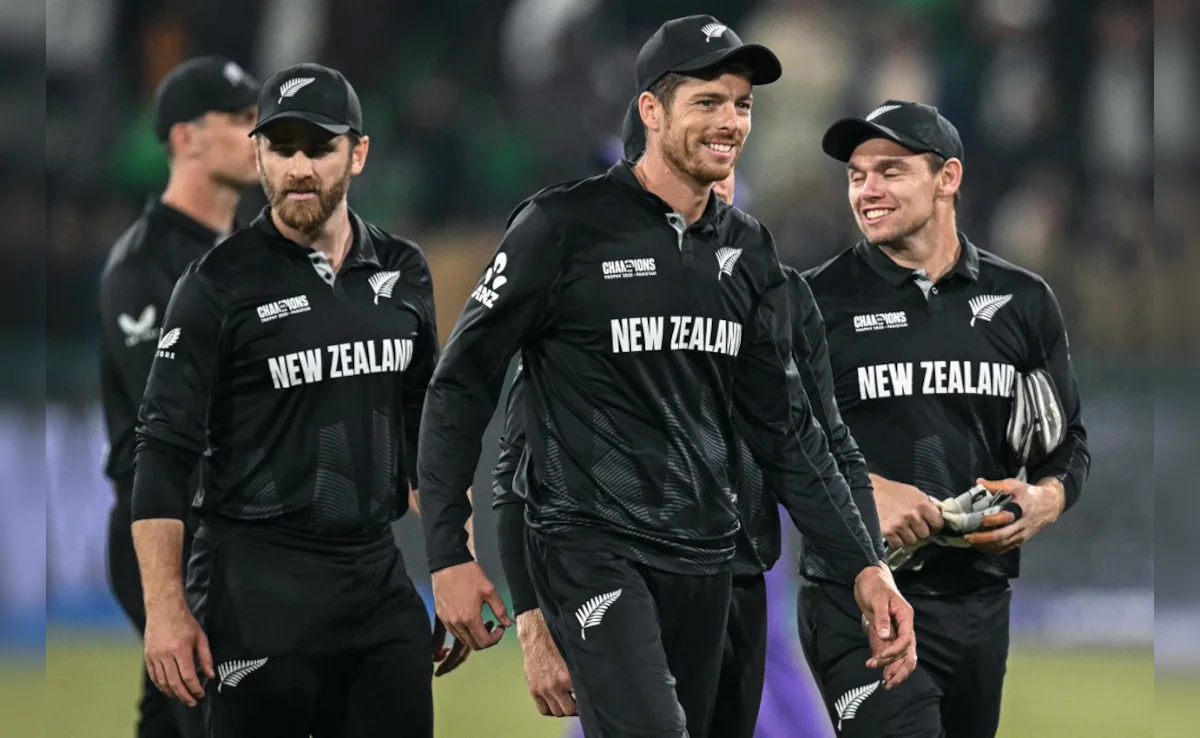
They are the perennial “dark horses” who are tired of the label. They are the “nice guys” who want to finish first. But as the ICC Men’s T20 World Cup 2026 approaches, New Zealand finds itself in a strange position: they are arguably the best-suited team for the conditions, yet they are walking a tactical tightrope that could snap at any moment.
Led by the calm and calculating Mitchell Santner, the Black Caps enter this tournament with a squad that seems specifically engineered for subcontinental attrition. But cricket is not played on spreadsheets. With key injuries disrupting their pace attack and a “Group of Death” scenario looming in Group D, the margin for error is microscopic.
Can Santner do what Brendon McCullum and Kane Williamson couldn’t? Can he deliver New Zealand’s first-ever T20 World Cup title?
To answer that, we must look beyond the squad list. We must break down the Strengths, Weaknesses, Opportunities, and Threats (SWOT) that define New Zealand’s 2026 campaign.
The Squad: A Mix of Stability and Scramble
Before diving into the analysis, let’s look at the 15 men tasked with bringing the trophy home. The late injury to Adam Milne has forced a reshuffle, bringing the towering Kyle Jamieson back into the fray.
Table 1: New Zealand Squad for T20 World Cup 2026
| Role | Player Name | Key Attribute |
| Captain / All-Rounder | Mitchell Santner | Left-arm orthodox; Tactical genius |
| Top Order Batters | Finn Allen | Explosive Power |
| Devon Conway | Anchor / Wicket-keeper | |
| Mark Chapman | Finisher / Floater | |
| Middle Order / All-Rounders | Daryl Mitchell | Pressure Absorber |
| Glenn Phillips | X-Factor / Part-time Spin | |
| Rachin Ravindra | Spin Basher / Left-arm Spin | |
| Michael Bracewell | Off-spin / Power Hitter | |
| James Neesham | Death Overs Hitter | |
| Spin Bowlers | Ish Sodhi | Leg-spin Wicket-taker |
| Pace Bowlers | Matt Henry | New Ball Specialist |
| Lockie Ferguson | Express Pace | |
| Jacob Duffy | Swing / Wicket-taker | |
| Kyle Jamieson | Bounce / Injury Replacement |
STRENGTHS: The “Spin Web” and Tactical Flexibility
New Zealand’s biggest strength isn’t a single player; it is their adaptability. They have constructed a team that doesn’t just survive on turning tracks—it thrives on them.
1. The “Chennai Blueprint”: Infinite Spin Options
Most teams bring two specialist spinners. New Zealand brings an army.
While Mitchell Santner and Ish Sodhi are the frontline generals, the real nightmare for opposition batters lies in the “support cast.”
- Glenn Phillips (Off-spin)
- Michael Bracewell (Off-spin)
- Rachin Ravindra (Left-arm orthodox)
This allows Santner to exploit matchups relentlessly. If a left-hander is batting, he has two off-spinners ready. If the pitch grips, he can bowl 12-14 overs of spin without losing batting depth. This is crucial because 3 out of their 4 group games are in Chennai—a venue historically famous for aiding spin.
2. A Middle Order Built for Chaos
T20 cricket often sees top-order collapses. New Zealand is prepared for this.
Devon Conway and Daryl Mitchell are masters of “arresting the slide.” They don’t panic. They rotate strike, absorb pressure, and launch late. Conversely, if the start is good, players like Glenn Phillips and Mark Chapman can float up the order to accelerate instantly. They don’t have a rigid batting order; they have a “situation-based” order.
3. The Rise of Jacob Duffy
The inclusion of Jacob Duffy (referenced as Ben Duffy in some initial reports, but confirmed as Jacob in the squad list) is a masterstroke. Unlike defensive bowlers, Duffy is a strike bowler. He takes wickets in bursts. In a format where teams try to “wait out” the difficult overs, Duffy forces the issue, often breaking partnerships before they settle.
WEAKNESSES: The Pace Puzzle and The “Boom or Bust” Opener
However, the armor has cracks. Significant ones.
1. The Adam Milne Void
The hamstring injury to Adam Milne is a massive blow. Milne offered high pace and accuracy at the death.
His replacement, Kyle Jamieson, is a world-class talent, but his T20 death bowling has historically been expensive. Without Milne, the burden of the final 4 overs falls heavily on Lockie Ferguson and Matt Henry. If one of them has an off day, New Zealand lacks a “Plan B” for the death overs.
2. The Finn Allen Lottery
Finn Allen is a match-winner on his day. He can score 50 off 20 balls and kill the game in the Powerplay.
But on slow, turning pitches (like Chennai), his high-risk technique is vulnerable. If Allen falls early cheaply in consecutive games, it exposes the anchors (Conway/Williamson’s successor role) to the new ball immediately, forcing them into a defensive shell. The team lacks a backup aggressive opener.
3. Who Bowls the 20th Over?
This is the multimillion-dollar question. Matt Henry is brilliant with the new ball. Santner bowls in the middle. Ferguson attacks the ribs. But who bowls the 20th over defending 12 runs?
- Neesham? (Risky)
- Jamieson? (Pace on ball can travel)
- Henry? (Usually bowled out early)The lack of a designated “Death Specialist” like Bumrah or Afridi is a glaring hole.
OPPORTUNITIES: The Schedule is Their Best Friend
Sometimes, luck favors the prepared. The ICC schedule has handed New Zealand a massive tactical advantage.
1. The Fortress of Chennai
New Zealand plays Afghanistan, UAE, and Canada in Chennai.
- Venue Stats: MA Chidambaram Stadium (Chepauk) has one of the lowest average first-innings scores in India. It assists spin and grip.
- The Advantage: This neutralizes the explosive batting of teams who prefer pace on the ball. It allows Santner, Sodhi, and Ravindra to dictate the game’s tempo. If New Zealand wins the toss in Chennai, they are nearly unbeatable with this specific squad.
2. Net Run Rate (NRR) Boosters
Matches against UAE and Canada in spin-friendly conditions offer a chance to win big. If New Zealand can bundle these teams out for low scores using their spin web, they can build a massive NRR cushion that could be the tie-breaker for the semi-finals.
THREATS: The “Ahmedabad Trap” and The Proteas
There is one fixture that sticks out like a sore thumb and threatens to derail the entire campaign.
1. February 14: The Valentine’s Day Massacre?
New Zealand faces South Africa in Ahmedabad.
Unlike Chennai, the Narendra Modi Stadium in Ahmedabad often produces red-soil pitches with good bounce and carry—a batter’s paradise.
- The Threat: South Africa possesses arguably the most destructive batting lineup (Klaasen, Miller, Stubbs). If the pitch is flat, New Zealand’s “control” strategy goes out the window. If their spinners travel the distance, they don’t have the raw pace depth to fight fire with fire. A heavy defeat here could ruin their confidence and NRR.
2. The “Spin Trap” Backfire
While a spin-heavy squad is great for Chennai, what if the curators prepare a fresh, green pitch? Or what if the dew factor in the evening makes the ball like a bar of soap?
If the spinners cannot grip the ball due to dew, New Zealand’s primary defensive weapon is neutralized, leaving their medium-pacers exposed to slaughter.
The Verdict: Can They Win?
Yes, but conditions must align.
New Zealand is not the most powerful team in the tournament. They won’t hit the most sixes. But under Mitchell Santner, they are the smartest.
Their path to the trophy relies on turning every game into a tactical chess match rather than a slugfest. If the pitches in the knockout stages are slow and tired (which is likely late in the tournament), the Black Caps are arguably the favorites.
However, if they run into a flat deck and a power-hitting powerhouse like Australia or India, their lack of death-bowling specialists could see another heartbreaking exit.
Vital Fixtures: The Road to Glory
Mark these dates. The February 14th clash is the one that likely decides who tops Group D.
Table 2: New Zealand’s Group D Schedule
| Date | Opponent | Venue | The Stakes |
| Feb 8 | Afghanistan | Chennai | The Danger Game. Rashid vs Santner. |
| Feb 10 | UAE | Chennai | Must-win & NRR booster. |
| Feb 14 | South Africa | Ahmedabad | The Group Decider. Pace vs Power. |
| Feb 17 | Canada | Chennai | Routine win (expected). |
Prediction: New Zealand will qualify for the Super 8s comfortably. From there, their fate depends entirely on the coin toss and the curator’s mood.
Do you think Santner has the best spin attack in the tournament? Share your thoughts!