
New Zealand vs Afghanistan Head-to-Head Records: The One Stat That Should Terrify New Zealand Fans
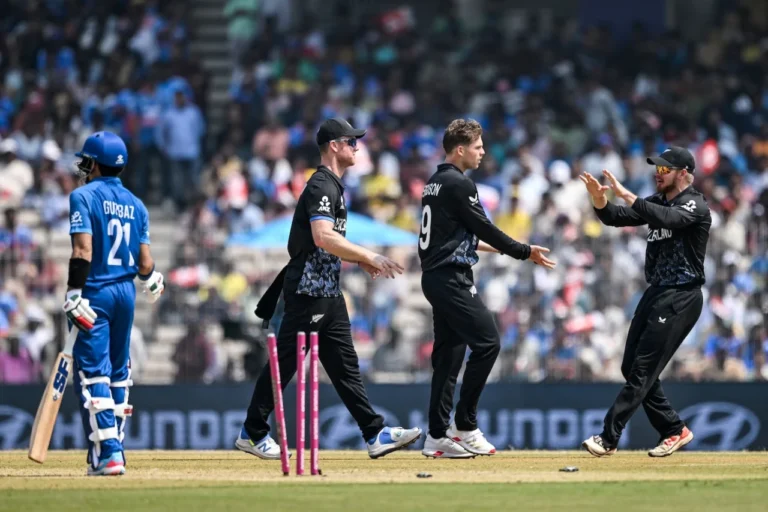
When the schedule for the ICC Men’s T20 World Cup 2026 was released, one fixture immediately circled in red by cricket analysts was New Zealand vs Afghanistan. Why? Because the last time these two met in a World Cup, it wasn’t a contest—it was a demolition.

For years, New Zealand has been the disciplined “big brother” of world cricket, efficient and consistent. Afghanistan, meanwhile, was the spirited underdog. But that narrative shattered in Guyana in 2024. Now, as they prepare to face off at the spin-friendly MA Chidambaram Stadium in Chennai, the head-to-head records suggest a rivalry that is far more balanced—and dangerous for the Kiwis—than the rankings imply.
Below, we break down every run, wicket, and record to show you exactly where this match will be won or lost.
The Big Picture: Overall Head-to-Head Record
Unlike New Zealand’s rivalries with Australia or England, which span decades, the history between the Black Caps and the Blue Tigers is brief but explosive. They have never played a bilateral T20I series; their entire history is written in the high-pressure ink of World Cups.
Table 1: NZ vs AFG T20I Overall Record
The Suspense Factor: The “50-50” split is deceptive. The momentum is entirely with Afghanistan. Their victory in 2024 was not a narrow escape; it was a tactical dismantling of New Zealand’s batting lineup.
Detailed Match History: A Tale of Two World Cups
To understand the upcoming clash in Chennai, we must analyze the stark contrast between their previous meetings.
1. The “Business as Usual” Win (2021 World Cup)
- Venue: Abu Dhabi
- Result: New Zealand won by 8 wickets.
- The Story: In 2021, New Zealand was at the peak of their powers. Their pacers (Boult and Southee) utilized the conditions well, restricting Afghanistan to 124/8. The chase was clinical, with Kane Williamson guiding the team home comfortably. At this point, the gap between the sides looked massive.
2. The “Guyana Shock” (2024 World Cup)
- Venue: Providence Stadium, Guyana
- Result: Afghanistan won by 84 runs.
- The Story: This is the match that changed everything. On a slow, turning track (similar to what is expected in Chennai 2026), Afghanistan batted first and posted a competitive 159. What followed was carnage.
- Fazalhaq Farooqi destroyed the top order with swing.
- Rashid Khan strangled the middle order.
- New Zealand was bowled out for 75—their 4th lowest total in T20I history.
Table 2: Match-by-Match Summary
Team Records: Highest and Lowest Totals
These stats highlight the volatility of this matchup. New Zealand has never scored big against Afghanistan, while Afghanistan has shown they can defend totals by bowling the opposition out cheaply.
Table 3: Highest & Lowest Team Totals (H2H)
Analysis: New Zealand failing to cross 80 runs in their last meeting is a psychological scar they carry into Chennai. It proves that when the ball grips, the Kiwi batters struggle to rotate strike against the Afghan spinners.
Batting Records: The Gurbaz Factor
In a fixture dominated by bowlers, one batter stands out. Rahmanullah Gurbaz is the only player who has consistently taken the attack to the New Zealand bowlers.
Table 4: Top Run Scorers in NZ vs AFG T20Is
Key Takeaway: Rahmanullah Gurbaz’s 80 off 56 balls in the 2024 clash was the difference between the two sides. His ability to attack the pacers in the powerplay neutralizes New Zealand’s biggest strength (Boult/Henry). If New Zealand doesn’t dismiss Gurbaz early in Chennai, history will repeat itself.
Bowling Records: The Spin Web
This is where the game turns. The bowling stats are heavily skewed towards the Afghans, specifically their ability to take wickets in clusters.
Table 5: Top Wicket Takers in NZ vs AFG T20Is
The “Rashid” Threat: Rashid Khan has taken 5 wickets in just 2 matches against New Zealand. His economy rate of 5.50 means he not only takes wickets but also stops the run flow, forcing batters to take risks against the other bowlers.
Venue Context: The “Chepauk” Connection
While H2H records are vital, the venue for the 2026 clash adds another layer of data we must consider.
- Venue: MA Chidambaram Stadium, Chennai.
- Conditions: Slow, turning, low bounce.
- Advantage:Afghanistan.
- Many Afghan players (Rashid, Noor, Nabi) have extensive experience in the IPL playing on similar surfaces.
- New Zealand batters have historically struggled in Chennai (e.g., their struggles against Indian spinners in bilateral series here).
- Noor Ahmad, likely to play, calls Chennai his “home ground” in the IPL (CSK), giving him local knowledge that even the Kiwis lack.
The “Revenge” Narrative: What Needs to Change?
For New Zealand to correct the record and improve their H2H standing, they need to fix specific issues highlighted by the data:
- Powerplay Batting: In 2024, they were 3 down inside the Powerplay. They must preserve wickets against Fazalhaq Farooqi‘s inswing.
- Playing Spin: The middle order (Mitchell, Phillips, Chapman) scored at a strike rate of less than 100 against spin in the last meeting. They need to employ sweeps and reverse sweeps to unsettle Rashid and Nabi.
- Target Setting: If batting first, New Zealand cannot aim for 200. A score of 160 is a winning total at Chepauk if they bowl well.
Conclusion: A Rivalry Reborn
The stats don’t lie. New Zealand may be the higher-ranked team, but Afghanistan holds the psychological edge. The H2H record is tied at 1-1, but the nature of that one loss—a 75-run collapse—looms large.
On Sunday, February 8, 2026, we aren’t just watching a cricket match; we are watching a test of New Zealand’s ability to learn from their data. Will they be the disciplined Black Caps of 2021, or will they fall into the Afghan spin trap like they did in 2024?
The numbers suggest an upset is brewing. Tune in to see if the data holds true.